Why Western Europe Costs Vary
A Western Europe trip rarely has one meaningful “daily cost.” A week split between Lisbon, Paris, and Amsterdam can look similar on a map but behave very differently at checkout. Lodging prices change by city and season, while rail fares rise closer to departure and budget flights may add baggage, airport transfers, and inconvenient travel times. Even the same hotel standard can cost twice as much in a capital or during a major festival.
Your travel style matters just as much. Cooking breakfast, using public transport, and choosing free sights can keep an expensive city manageable; frequent restaurant meals, taxis, paid attractions, and central rooms quickly reshape the total. The practical question is not simply how much Western Europe costs, but which combination of destinations, dates, comfort, and travel pace you are willing to fund.
The Biggest Daily Expenses
Once the route is chosen, lodging usually becomes the largest fixed expense. A private room in central Paris, Amsterdam, or London can consume more than half of a moderate daily budget, especially from late spring through early autumn. Staying outside the center may cut the nightly rate, but the saving is less convincing if you add long commutes, late-night taxis, or time lost changing trains. A slightly smaller room near a major station can sometimes offer better value than a cheaper property on the edge of town.
Transport is the next cost that can quietly distort a plan. A €40 train fare looks reasonable until a multi-country itinerary includes six or seven travel days, seat reservations, airport transfers, and luggage fees. Slow regional trains may save money and provide more flexible booking, while high-speed routes save hours but reward early reservations. Moving every two days also creates costs that do not appear in a simple ticket estimate: station meals, storage lockers, and an extra night booked around an awkward departure.
Food and sightseeing then determine how expensive each day feels. Supermarket breakfasts and casual lunches work well on travel-heavy days, but relying on them everywhere can make a long trip tiring. Paid landmarks, museum reservations, guided tours, and city passes may be worthwhile in a concentrated sightseeing schedule, yet unnecessary when weather, queues, or fatigue reduce how much you can realistically see.
Budget, Mid-Range, and Luxury Scenarios
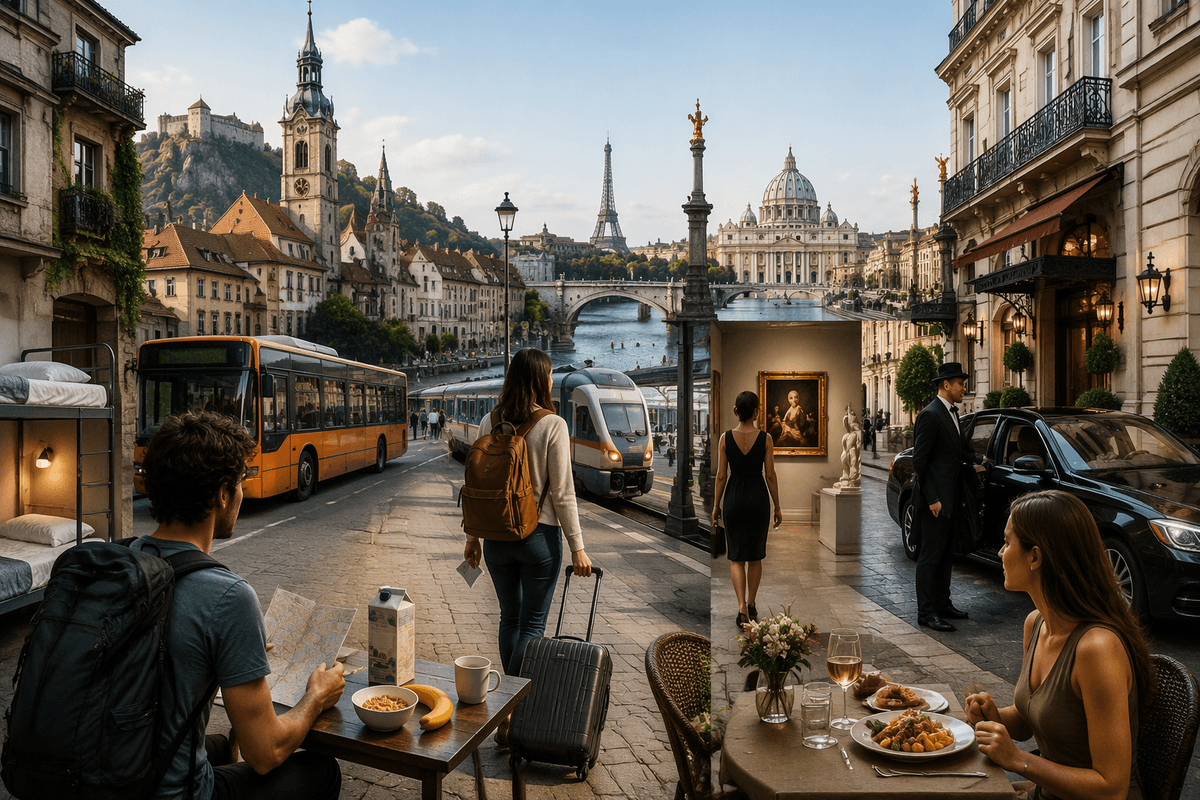
A useful way to test a route is to price it in three versions rather than trust one headline figure. A budget traveler might spend roughly €70–€110 per person per day by using hostels or simple guesthouses, supermarket breakfasts, casual meals, public transport, and mostly free attractions. That can work well in Portugal, Spain, or smaller cities, but it becomes difficult in Paris, Amsterdam, London, or Switzerland unless the trip is carefully timed and lodging is booked early. Frequent transfers can also make this style more exhausting than the daily figure suggests.
A mid-range plan, often around €140–€230 per person daily, usually allows a private room, a mix of casual and sit-down meals, several paid sights, and faster or more convenient transport. This is the most practical comparison point for a first multi-country trip because it leaves some room for weather changes, reservations, and an occasional taxi without assuming luxury. However, the average can still be misleading if one expensive capital follows several cheaper stops.
Luxury travel can exceed €300 per person per day quickly, particularly with central four-star or five-star hotels, flexible rail tickets, fine dining, private transfers, and guided experiences. The benefit is lower friction rather than simply better rooms: less commuting, fewer queues, and more recovery time. For many travelers, upgrading only the busiest cities delivers more value than maintaining luxury standards across the entire route.
How Destination Choices Change Costs
Choosing destinations is often the fastest way to change the total without changing your travel style. Lisbon, Porto, Valencia, or Kraków may leave more room for private rooms and restaurant meals, while Paris, Amsterdam, London, Copenhagen, and Swiss cities can push the same itinerary well beyond its target. A cheaper city is not automatically better value if reaching it requires a costly flight, a long transfer, or an extra overnight stop.
Route shape matters as much as the cities themselves. A compact sequence such as Paris–Brussels–Amsterdam can reduce travel time and make rail practical, whereas adding Rome, Barcelona, or the Swiss Alps may require flights, checked baggage, and more expensive point-to-point transport. Smaller cities can lower lodging costs and offer a slower pace, but they may have fewer late-night services and require regional connections for major sights. For a first trip, compare not only the nightly rate but the complete cost of entering, staying in, and leaving each destination. One expensive capital balanced by two affordable stops can work well; a route built entirely around high-cost cities usually leaves little flexibility when prices or plans change.
Hidden Costs Travelers Often Miss
By the time the main bookings are paid, several smaller charges can still change the calculation. Tourist taxes may be added per person per night, while hotel breakfast, resort-style service fees, luggage storage, and seat reservations can turn an apparently reasonable room or rail fare into a higher one. Budget flights are especially prone to this: a checked bag, airport bus, and early departure may cost more in money and sleep than a slightly pricier train.
Daily friction also has a price. A late arrival may require an expensive meal near the station, a transit strike can force a taxi, and card or ATM fees accumulate across multiple countries. Weather creates similar pressure when rain leads to museums, cafés, or last-minute transport instead of planned free activities. Keep a separate contingency allowance—often 10–15 percent of the trip total—so these costs do not consume the money reserved for your final days.
Building Your Realistic Trip Budget

Build the budget from the route outward, not from a single daily average. List each city, number of nights, lodging target, intercity fare, local transport, meals, attractions, and likely taxes before calculating the total. Then price the same itinerary at two comfort levels: one that works if bookings go smoothly and another that allows a better-located room, faster train, or occasional taxi. This comparison shows whether the route is affordable or merely possible.
Next, separate fixed costs from flexible ones. Flights, rail tickets, accommodation, insurance, and major reservations deserve early attention; food, local transport, and sightseeing can be adjusted during the trip. Add the 10–15 percent contingency to the complete total rather than only to daily spending, and divide that figure by the number of travelers and nights. If the result feels high, change one major variable—travel in shoulder season, remove a costly city, slow the pace, or accept simpler lodging—before cutting every meal and attraction.
What Your Budget Ultimately Buys
When the numbers are finally added, your budget is buying more than beds, meals, and train tickets. It buys location, recovery time, flexibility, and the ability to stay longer in places that deserve it. A lower-cost route may offer more destinations, but a better-funded plan often produces fewer rushed departures and fewer compromises.
The most credible budget is therefore not the cheapest possible total. It is the amount that supports your preferred pace, comfort, and priorities without relying on perfect weather or flawless bookings. If the figure is too high, adjust the route first—not every small pleasure along the way.