Why Iodine Sources Can Seem Confusing
The confusion often starts with a simple meal. A person may replace iodized salt with sea salt, add a little seaweed, and assume the change is automatically more natural and more reliable. Then the same food appears again in a snack, broth, or supplement, while other iodine-containing foods have quietly disappeared from the diet. The total can be difficult to judge by taste or appearance.
Iodine is found in several everyday foods, including dairy products, eggs, seafood, and foods made with iodized salt, but the amount is not consistent across every brand, portion, or preparation. Sea vegetables create an even wider gap: one type or serving may provide modest iodine, while another may provide far more than expected. As diets change, intake can therefore drift in either direction. “Natural” describes the source, not how much iodine it contributes, and that distinction matters when one food is treated as the answer.
Foods That Naturally Provide Meaningful Iodine
The breakfast built around yogurt and eggs can contribute iodine without making the meal feel unusual. Dairy products often provide a steady amount, while eggs can add a smaller but useful contribution. Fish and shellfish may provide iodine as well, with the amount changing according to the species and serving size. For someone avoiding iodized salt, these foods may become important simply because they appear regularly, not because any one portion is guaranteed to cover the day’s needs.
A cup of one yogurt brand may not match another, and a seafood meal once a week creates a different pattern from smaller portions eaten several times. Plant-based diets can be especially variable when dairy, eggs, and seafood are removed without a planned replacement. Fortified foods may contribute iodine, but fortification is not universal, so the label and product type matter. This makes ordinary meals useful clues rather than precise measurements. A person may be getting meaningful iodine from several modest sources—or almost none if those foods have gradually been replaced with alternatives that contain little iodine.
Sea Vegetables Offer Plenty—and Sometimes Too Much
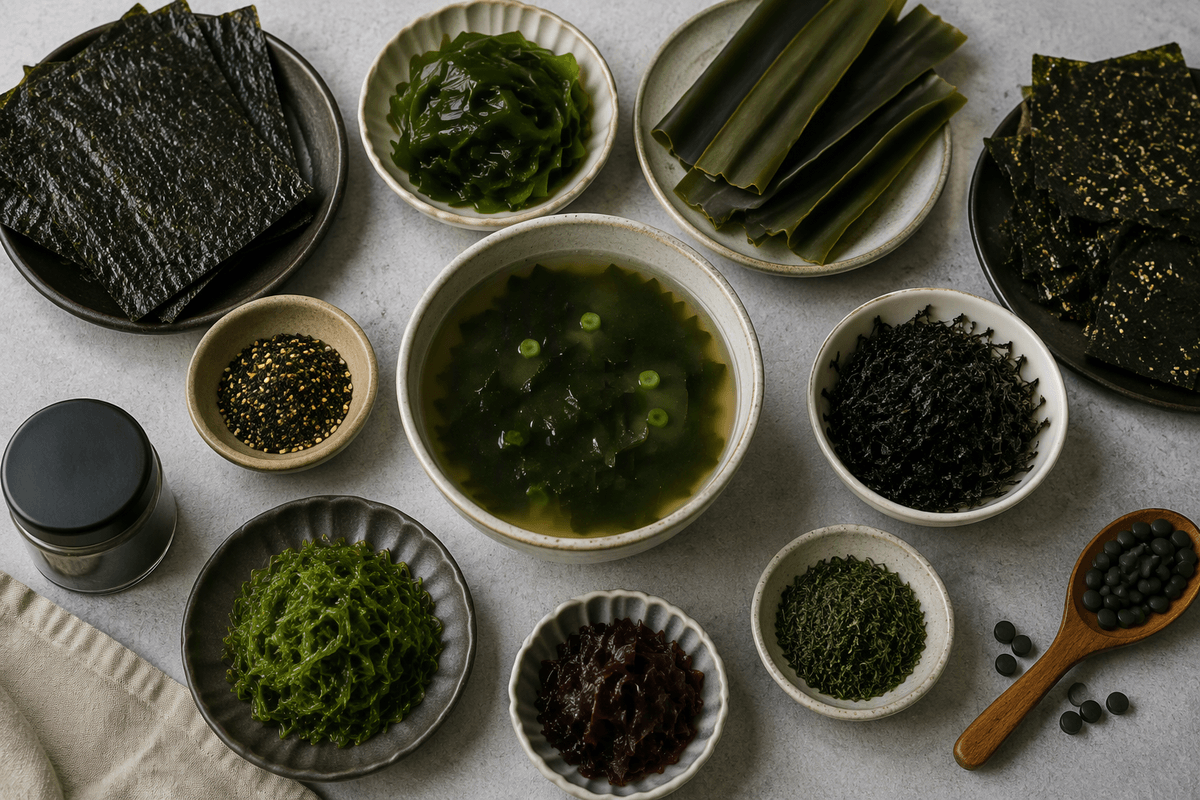
A small packet of seaweed can look like a modest addition to a meal, especially when it is sprinkled over rice or folded into soup. Yet sea vegetables are not interchangeable. Nori, wakame, and kombu can contain very different amounts of iodine, and the difference may be difficult to notice from the label or the portion’s appearance. A few flakes of one product may contribute far less than a piece of another, while a broth made with kombu can concentrate iodine without tasting unusually strong.
That unevenness can create a quiet shift in intake. Someone avoiding iodized salt may add seaweed regularly and feel reassured that the diet now has a dependable source. Later, seaweed snacks, seasoning blends, or supplements may add more of the same nutrient, even though each choice seems small. Preparation and product type can also affect the final amount, so estimates are not always precise. Sea vegetables can be useful foods, but “more natural” does not mean “better in larger amounts.” Their iodine content makes portion, frequency, and variety more important than simply including them.
What Changes Iodine Content From Food
The same food can provide a different amount of iodine depending on how it was produced and sold. Dairy iodine may reflect the animals’ feed and the sanitation products used on farms, while seafood varies with species, habitat, and serving size. Packaged foods can change when manufacturers use iodized salt in one product but ordinary salt in another. Even two similar soups, breads, or plant-based alternatives may therefore make different contributions.
Cooking does not create a dependable correction. Some iodine may be lost during processing or prolonged heating, while liquid-based meals may retain iodine in the broth. Rinsing, soaking, or draining can also change what remains, but the effect is not consistent enough to estimate casually. This is why a food diary may show a pattern without giving an exact number. A person who changes brands, reduces dairy, or adds seaweed several times a week can shift intake gradually, often without noticing any immediate difference. Portion size and frequency usually matter more than the food’s reputation as a “good” source.
When a Reasonable Choice Causes New Concerns
The concern may appear only after a sensible change has become a routine. Someone replaces iodized salt, chooses seaweed seasoning, and feels confident that the diet is more carefully managed. Weeks later, dairy has also been reduced, seafood is eaten less often, and the seaweed product has changed. The original choice was reasonable, but the overall pattern is no longer the same.
It can also move in the opposite direction. A person may use seaweed snacks, kombu-based broths, and an iodine-containing supplement, assuming each contributes only a little. Because the amount varies so much by product and portion, the total may be difficult to judge without close label reading. This does not make seaweed or other natural foods unsuitable; it shows why one food cannot reliably stand in for an entire dietary pattern. When intake becomes inconsistent, adding more may not solve the uncertainty. The more useful question is often what appears repeatedly across the week, and what has quietly been removed.
Natural Sources Compared With Iodized Salt
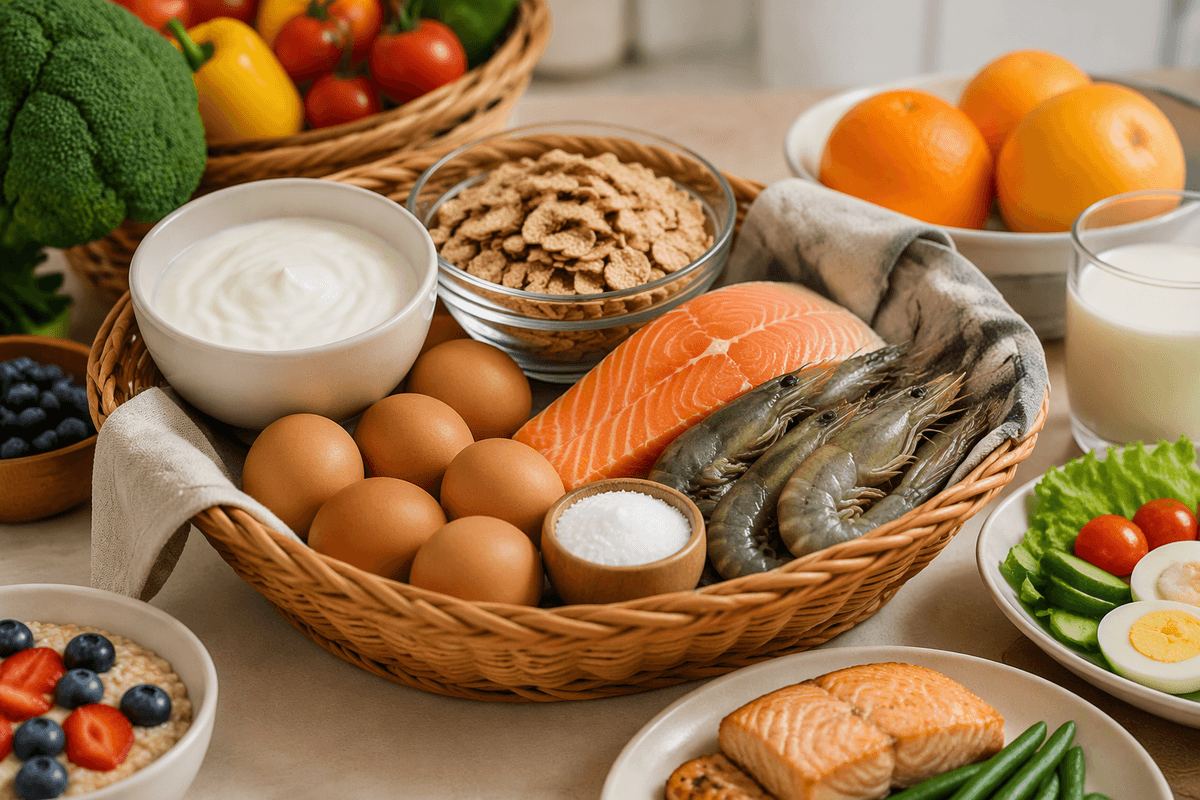
At the grocery store, the difference may seem straightforward: natural foods offer iodine along with other nutrients, while iodized salt provides a more predictable amount in a familiar ingredient. That predictability can be useful, especially when dairy, eggs, or seafood are eaten irregularly. It does not mean iodized salt is required for every person, but replacing it with plain sea salt removes a consistent source without necessarily adding an equivalent one.
Natural foods have a different advantage. They contribute iodine as part of a meal, so intake may be spread across yogurt, eggs, seafood, or fortified products rather than tied to salt use. These foods come and go, and their iodine content can differ between brands and portions. Iodized salt also has practical boundaries: using more is not a sensible way to correct an uncertain diet, and sodium intake remains a separate concern. In practice, the choice is less about natural versus processed and more about whether the overall pattern provides a reasonably steady amount without relying heavily on one unpredictable source.
Finding Practical Clarity Without Chasing More
After comparing labels and meals, the clearest answer may feel less dramatic than expected. Iodine intake usually comes from a pattern: perhaps dairy or eggs most days, seafood occasionally, and a fortified food or iodized salt used in a consistent way. Seaweed can fit into that pattern, but it is not a dependable measuring tool because the type, portion, and frequency can change the amount so sharply.
For someone changing diets, the useful check is not whether one food seems especially rich, but whether several familiar sources have disappeared at once. A vegetarian, dairy-free, or low-salt routine may need closer attention than a varied diet that regularly includes iodine-containing foods. At the same time, adding multiple seaweed products or supplements can create a different kind of uncertainty. A steady, moderate pattern is often easier to understand than chasing the highest-iodine option, especially when “natural” says little about the actual amount.