Why this Marrakech–Atlas–Essaouira loop works
I almost tried to “day-trip” both the Atlas and Essaouira from Marrakech—until I mapped the hours and realized I’d spend my best energy in a car. This loop works because it puts the long-ish moves on two days only, then buys you real mornings in each place: culture first (Marrakech), altitude second (Imlil/Atlas villages), ocean last (Essaouira).
In practice, it’s a clean 2 nights Marrakech, 2 nights Atlas, 1 night Essaouira (then back to Marrakech on Day 6). Marrakech→Imlil is typically ~1.5–2 hours, and Marrakech→Essaouira ~2.5–3 hours; trying to do either as a “quick out-and-back” adds friction—late starts, bargaining with drivers, and sightseeing squeezed into the hottest hours. The compromise is that Atlas→Essaouira is a longer transfer (often 4–5 hours, usually via Marrakech), so you’re choosing fewer places done properly over more places done vaguely.
Day 1 Marrakech arrival—Must: Jemaa; Opt: hammam; Skip: long tours
The first real decision hits before you even leave the airport: do you push into the medina immediately, or pause to make the rest of the day smoother? If your flight lands mid-afternoon, I’d take the “slow entry” and book a transfer straight to your riad (not the cheapest option, but it prevents the classic first-night spiral of getting lost with luggage and arriving already annoyed). The medina is most enjoyable when you’re carrying nothing, and on Day 1 you’re usually carrying everything.
Jemaa el-Fna is the must, but timing matters more than planning. Go around dusk, when it transitions from open square to full theatre; it works even if you’re tired because you can just orbit the edges and keep moving. What doesn’t work: committing to a long guided tour on arrival day. Between immigration, cash/ATM stops, and riad check-in, “half-day tour” windows shrink fast, and you’ll feel that pressure the whole time.
If you want one intentional splurge, slot a hammam late evening—especially if you’re jet-lagged and overstimulated. It’s not subtle, and it can be intense if you’re not used to vigorous scrubbing, but it resets you for a strong Day 2 in the medina instead of a groggy one.
Day 2 Marrakech deep dive—Must: medina; Opt: gardens; Skip: far suburbs
I hesitated on Day 2 between “plan it properly” and “just get lost,” and the compromise that worked was simple: pick one medina anchor in the morning, then let yourself drift. Starting early matters because the lanes are calmer and you can actually see what you’re negotiating; by midday, the same route feels twice as long once scooters and crowds stack up. If you’re deciding between hiring a guide or going solo, I’d only pay for a guide if you’re trying to understand craft districts (tanneries, metalwork, dye shops) without getting pulled into twenty “my cousin has a showroom” detours.
The must is a focused medina loop—souks → a historic site you care about (madrasa/palace/museum) → lunch within walking distance of your riad—because crossing the city repeatedly is where time leaks away. The medina rewards stamina, but it’s also where decision fatigue hits first, so give yourself a hard stop for a midday break.
If you still have energy, the gardens are the clean add-on: they’re a mental palate cleanser and a way to escape the noise without committing to another intense neighborhood. What I’d skip is anything in the far suburbs today—yes, it’s “only” a drive, but the round-trip traffic plus pickup coordination turns your best medina hours into windshield time.
Day 3 Into the Atlas—Must: Imlil; Opt: waterfall walk; Skip: peak push
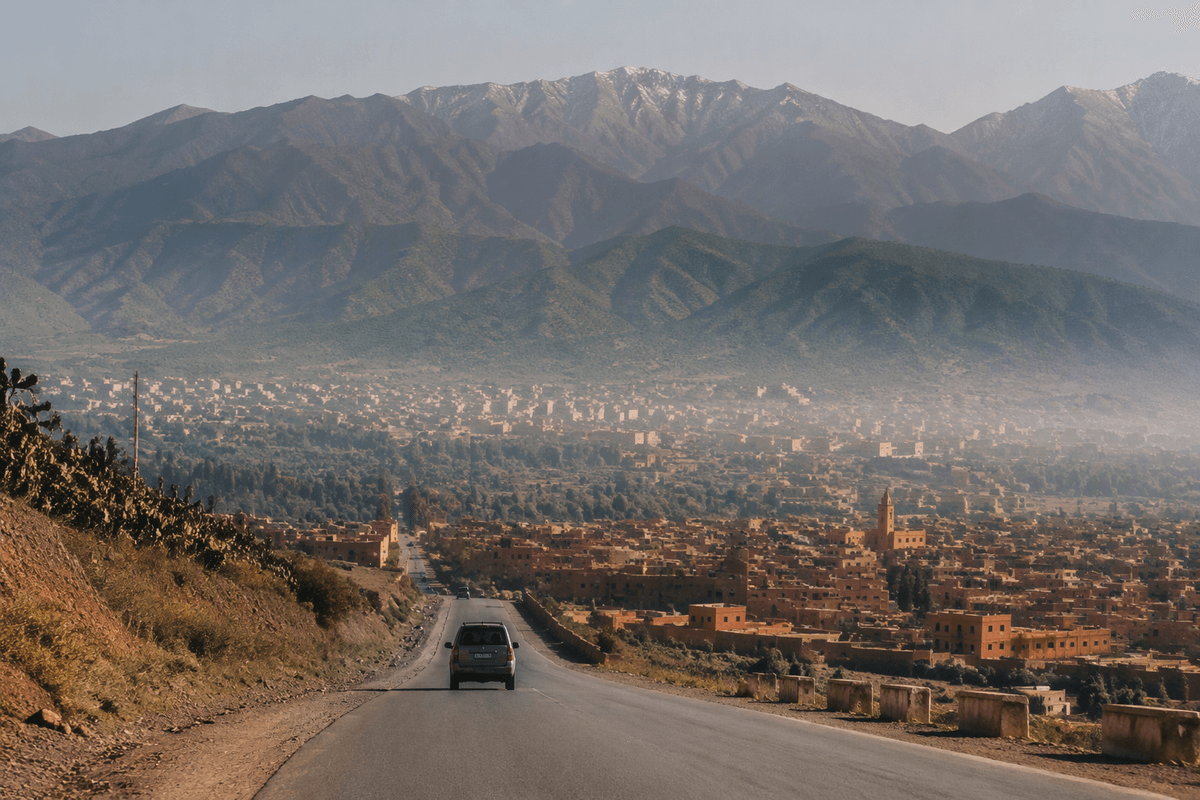
The morning we left Marrakech, the first friction point wasn’t the road—it was the pickup. If your driver says “9:00,” assume 9:20 once they thread through traffic and find the right gate, so don’t schedule a tight lunch in the mountains. The payoff is immediate, though: within an hour or two the air sharpens, the honking drops away, and Imlil starts to feel like the reset you were hoping Essaouira would be—just with uphill baked in. For a first-timer, Imlil is the must because it’s straightforward logistically (one clean drive, no multi-transfer puzzle) and it gives you real Atlas texture without needing expedition-level fitness.
If you arrive with enough daylight, the optional add-on that actually earns its effort is a short waterfall walk—but treat it as a “legs check,” not a heroic hike. Even a modest route feels longer if you’re carrying a daypack, adjusting to altitude, or arriving in midday heat, and the paths can be uneven in a way that’s slow rather than scary. I’d skip any peak push entirely on this timeline: it turns a calm overnight into early alarms, gear talk, and the kind of fatigue that steals the next day’s village wandering.
Day 4 Atlas villages—Must: tea views; Opt: cooking class; Skip: extra transfers
The morning decision in the Atlas is whether you chase “more villages” or stay close and go deeper. We chose the slower option: a short walk out of Imlil, then a long stop wherever the view opens up enough to justify sitting still. The must here is tea on a terrace with a real sightline—snow peaks if you’re lucky, layered valleys if you’re not—because it’s the one Atlas experience that doesn’t require perfect weather or strong legs. What doesn’t work as well: trying to stack multiple viewpoints before lunch; the footpaths are slower than they look on a map, and every small climb adds up when you’re still acclimating.
If you want something structured without turning the day into a march, an in-village cooking class is the clean add-on. It’s time-consuming, but in a good way: you trade distance for texture, and you’re not constantly checking your watch for the next turn-off.
What I’d skip is extra transfers—bouncing Imlil → another valley → yet another guesthouse. On paper it’s “close,” but you burn hours coordinating rides, repacking, and re-orienting, and the Atlas is exactly where that logistical churn feels louder than it should.
Day 5 To Essaouira—Must: ramparts; Opt: seafood; Skip: midday heat
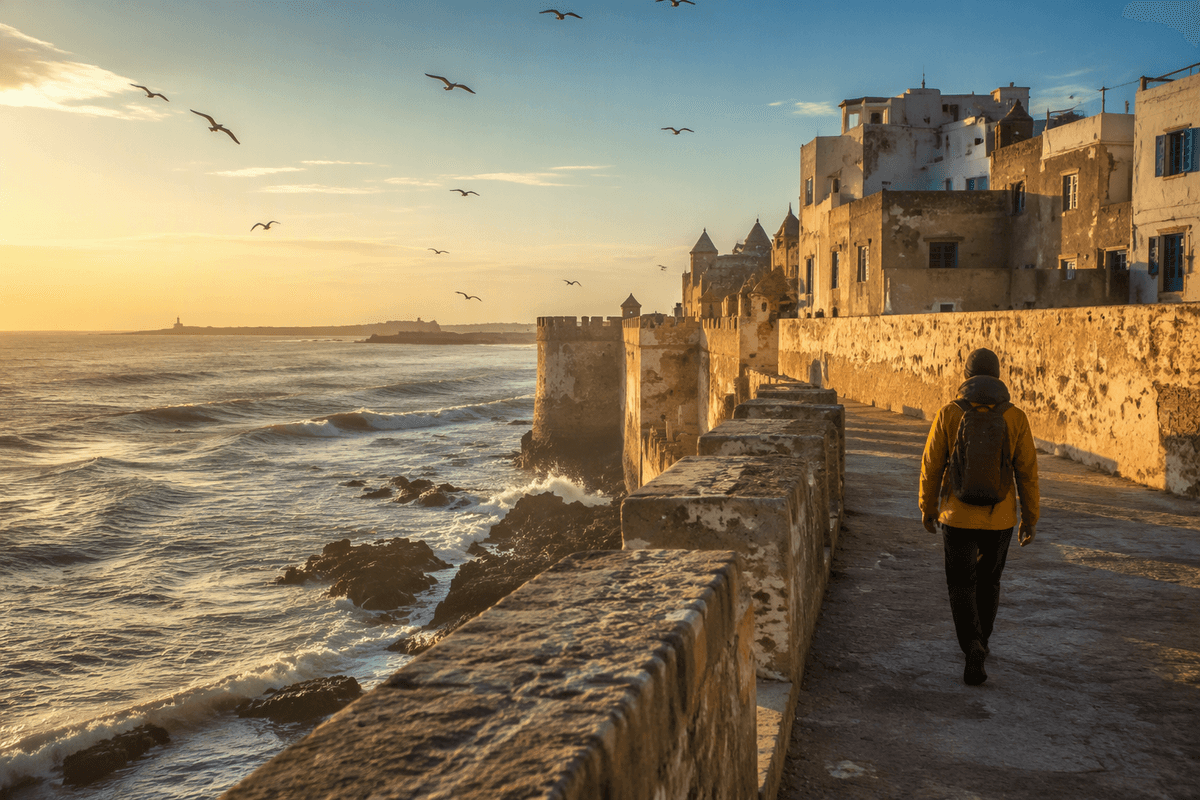
We left the Atlas earlier than I wanted, mostly because I’d learned that “a four-hour drive” rarely stays four once you factor in photo stops, snack breaks, and the slow crawl out of Marrakech’s edges. Going straight Imlil → Essaouira is doable with a private driver, but it’s still a long sit; if you’re prone to carsickness or you want a relaxed arrival, this is the day you pay for comfort (a good car, clear pickup time, and one planned stop) instead of improvising.
When you roll into Essaouira, resist the instinct to immediately “do the beach.” The must is the ramparts first—late afternoon light makes the ocean feel cinematic, and the breeze up there is a relief after mountain sun and road heat. What doesn’t work: landing at noon and trying to march the medina plus the walls in full glare; the wind helps, but the sun still turns everything into effort and you end up shopping just to hide in shade.
If you have the appetite, seafood is the clean optional add-on, but choose it strategically: early dinner beats the peak rush, and you’ll spend less time hovering for a table than you will actually eating. If you arrive drained, skip the “hunt” for the perfect spot and take the first place that looks busy for the right reason—fresh fish moving fast—then call it a night before the next day asks you to be up for sunrise.
Day 6 Essaouira + return—Must: sunrise; Opt: surf; Skip: last-minute stress
We set an alarm for sunrise and still almost talked ourselves out of it when the room felt warm and the street was quiet—until we stepped onto the ramparts and realized how different Essaouira is before the day-tour buses arrive. This is the must: a simple loop—walls to the harbor to the sand—because the light is soft, the wind is usually gentler, and you can move without negotiating space every ten steps. It’s also the one moment where Essaouira feels like downtime without you having to “schedule” it.
If you’re debating the optional surf lesson, do it only if you’ve got a late flight or you’re sleeping in Marrakech tonight. A two-hour lesson sounds neat on paper, but add wetsuit time, rinsing off, and waiting for the right conditions and it quietly eats your buffer for the drive back (typically ~2.5–3 hours to Marrakech, longer if you hit traffic). If you’re leaving Essaouira after lunch, I’d rather take a slow café breakfast and one last medina wander than squeeze in surf and spend the car ride calculating whether you’ll make check-in.
What to skip is the “one more stop” mindset on the return—especially if you’re relying on a driver who’s also juggling other pickups. Book the Marrakech drop-off point precisely (airport vs riad vs a landmark outside the medina), leave earlier than feels necessary, and let your final win be arriving calm instead of arriving fast.