The purchase looks protected—until something goes wrong
A purchase can feel safer the moment it goes on a credit card. The receipt is saved, the transaction appears in the account, and a benefit page suggests protection against damage or theft. That confidence often lasts until the item is actually damaged, disappears, or fails soon after arrival. Then the cardholder is no longer checking whether protection exists in general; they are testing whether this specific purchase, incident, and timeline fit the terms.
Coverage may depend on paying the full price with the card, reporting the loss quickly, and proving what happened. A deductible, excluded item, or missing document can turn an apparent safeguard into little more than a possible reimbursement. The benefit has value, but its practical strength is narrower than the purchase screen suggests.
Start with the incident, not the benefit description

When the phone screen cracks, the package vanishes from a porch, or a new appliance arrives with visible damage, the first useful question is not whether the card advertises purchase protection. It is what happened, when it happened, and who controlled the item at that moment. A theft after delivery may be treated differently from a package never confirmed as delivered. Accidental damage may qualify while a defect, misuse, or ordinary wear does not.
That incident-based review prevents a common mistake: matching a broad benefit label to a vague sense that something went wrong. The claim usually turns on a narrower sequence of facts, including the purchase date, delivery date, location of the loss, and immediate steps taken afterward. Waiting to report the incident can create a separate problem even when the original event appears covered. Before relying on the benefit, reconstruct the event in order and compare each point with the card’s terms. The wording matters less as a promise than as a test the incident must pass.
Timing can decide whether the claim survives
Once the sequence is clear, timing becomes less administrative and more decisive. Many purchase protection benefits impose short reporting windows, such as notifying the card issuer within days of theft or damage and submitting documents within a longer but still limited period. A cardholder who waits for a repair estimate, assumes the merchant will resolve the issue, or discovers the benefit months later may lose options before the claim is reviewed.
The purchase date can matter just as much as the incident date. Protection may begin only after the transaction posts, end after a set number of days, or apply differently while the item is in transit, at home, or being repaired. A delayed delivery, replacement shipment, or partial refund can make the timeline harder to reconstruct. Even a strong claim may stall if the cardholder cannot show when the item was bought, received, damaged, or reported. The practical step is to preserve the receipt, delivery record, photos, and correspondence immediately, then check every deadline before waiting for another party to respond.
The cause of loss changes the answer
With the dates established, the next question is what actually caused the loss. A stolen item may be treated differently from one left unattended, misplaced, or taken from an unlocked vehicle. Damage from a sudden accident can fit the benefit, while damage caused by a product defect, poor installation, neglect, or ordinary use may be directed back to the manufacturer or merchant. The same broken item can therefore produce different outcomes depending on the facts surrounding it.
That distinction creates uncertainty when the cause is not obvious. A package marked delivered but missing may require delivery records, a police report, or evidence that the cardholder took reasonable steps to secure it. Water damage might look accidental until the terms exclude flooding, weather, or use outside the manufacturer’s instructions. Attempting a repair before documenting the condition can also weaken the claim by making the original cause harder to verify. Purchase protection is not usually an all-purpose response to financial loss; it is a narrow answer to listed events. If the incident could reasonably be described in several ways, the cardholder should avoid guessing and preserve evidence that separates theft, accident, defect, and misuse.
Exclusions appear where confidence usually peaks
Even after the incident appears to fit, exclusions can narrow the protection at the point when confidence is highest. Electronics may be excluded when the damage involves a cracked screen, cosmetic marks, software, or a manufacturer defect. Jewelry, perishables, vehicles, collectibles, and items bought for resale may receive separate treatment or no protection at all. A purchase made with a gift card, refunded in part, or paid through a digital wallet may also raise questions about whether the required card payment was completed.
These limits are easy to miss because they rarely appear beside the purchase confirmation. They emerge later, during claim review, when the issuer asks whether the item was used for business, left in a public place, altered, or covered by another policy. The cost is not only the lost item; it may include a deductible, repair fee, or time spent proving that no exclusion applies. Confidence should therefore peak only after checking the excluded-property list, payment conditions, and definitions of damage, theft, and misuse. A benefit that sounds broad may protect a much smaller set of real situations.
Evidence becomes the real cost of protection
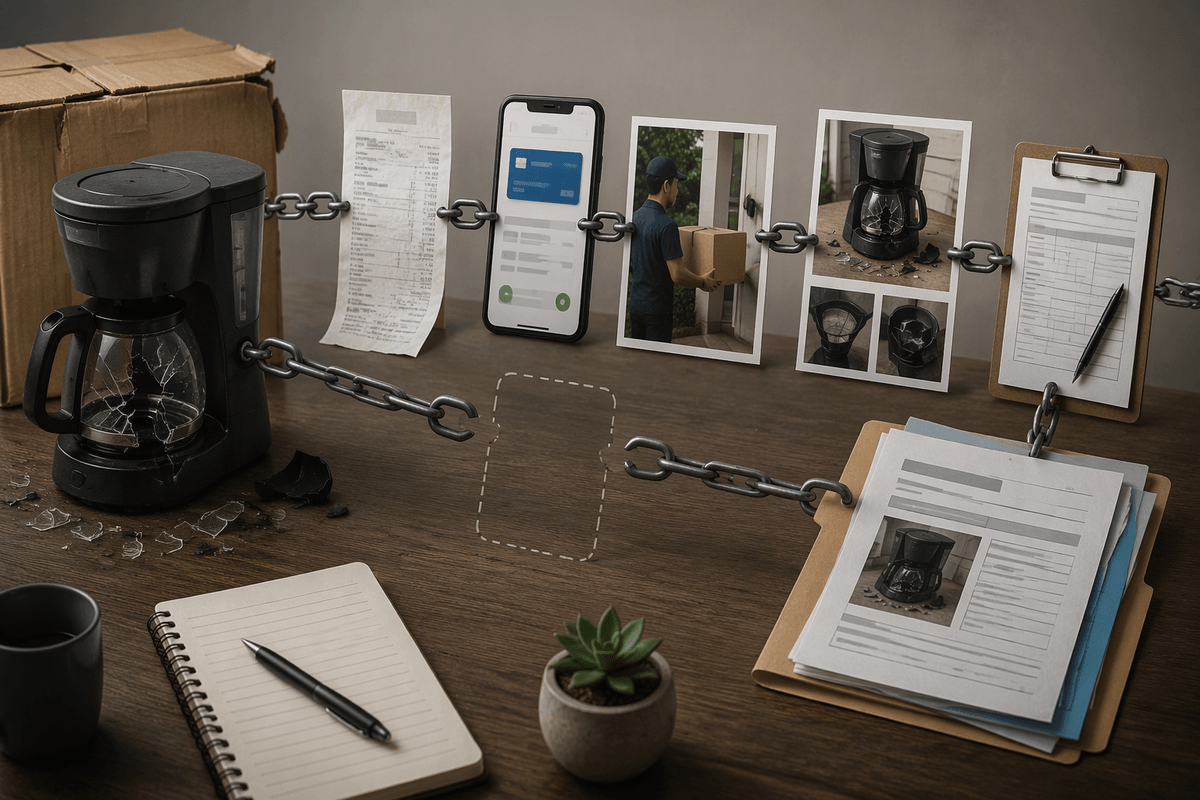
Once an exclusion becomes possible, documentation turns into the real cost of protection. The issuer may ask for the original receipt, card statement, delivery confirmation, photographs, repair estimate, police report, warranty decision, or proof that no other insurance will pay. Each item fills a gap in the story, but collecting them can take time, especially when a merchant, carrier, manufacturer, or police department controls part of the record.
Missing evidence does not always mean the loss was uncovered, but it can make approval harder and slower. A cardholder may also spend money on inspection, shipping, repair, or replacement before knowing whether reimbursement will follow. Acting too quickly creates another risk: discarding damaged packaging, repairing the item, or accepting a partial merchant refund can remove evidence or change the claim amount. The benefit is therefore not cost-free even when no premium is charged. Its practical value depends partly on whether the cardholder can preserve a credible record while the facts are still clear.
Treat purchase protection as backup, not certainty
That effort makes purchase protection useful, but not dependable enough to treat as the main reason for choosing a card. It can soften the loss after a qualifying theft or accident, yet timing, exclusions, deductibles, and evidence can reduce or eliminate reimbursement. A warranty, merchant return policy, renters insurance, or separate coverage may matter more for expensive or fragile items.
For a routine purchase, the benefit may be a worthwhile backup with little extra cost. For a costly item, the payment decision deserves a closer comparison: confirm the card’s terms, keep the records, and ask what happens if the claim fails. The realistic expectation is not guaranteed protection, but a possible recovery when the incident fits the rules and the paperwork holds together.