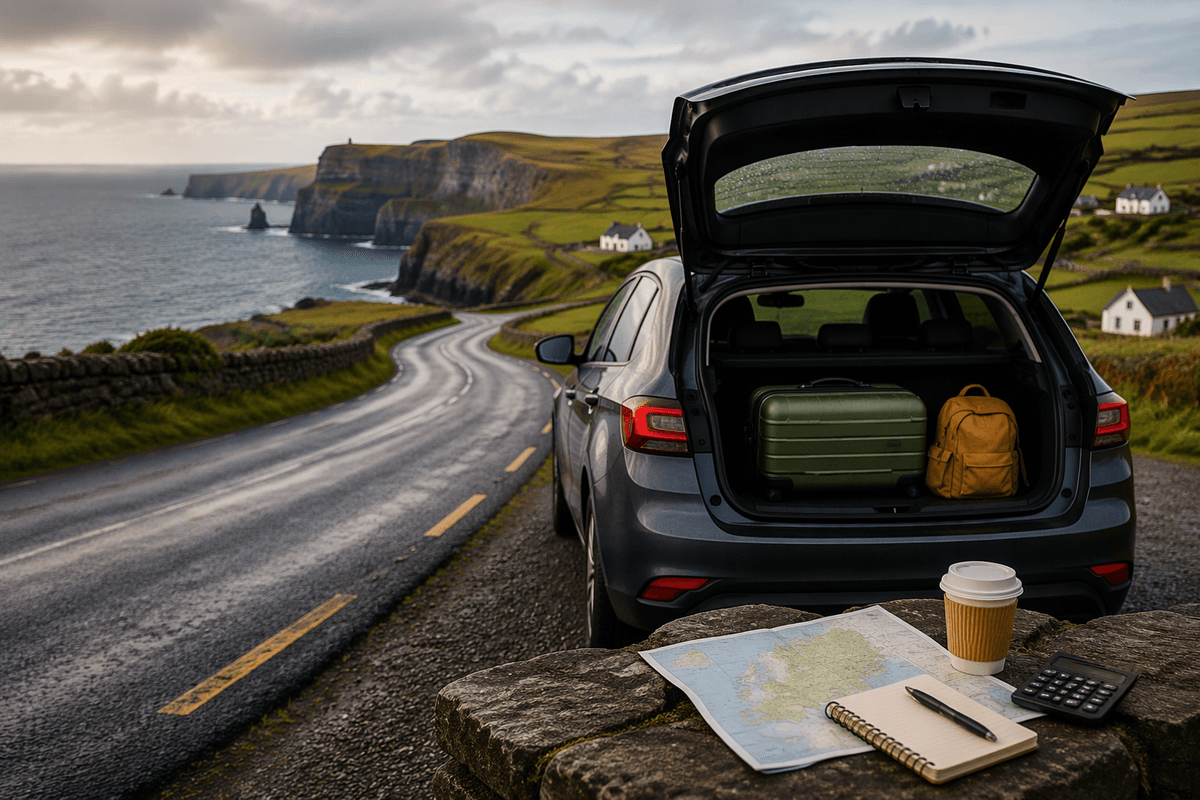
Why Ireland rentals cost more than they look
The first time I priced a “$22/day” compact out of Dublin, I felt like I’d found a loophole—until I clicked one step closer to checkout and watched the total jump. Ireland rentals often look cheap because the headline rate is basically the car shell: the real cost hides in insurance structure, payment holds, and add-ons that only appear when you’re already mentally committed to the deal.
The biggest reason is how insurance is presented. Many quotes assume you’ll accept a high excess (your out-of-pocket risk if there’s damage), then nudge you toward buying extra coverage at the counter to reduce it. If your credit card won’t cover Ireland (common with US cards), that “optional” coverage stops feeling optional fast—especially when you’re driving narrow west-coast roads where small scrapes are easy to collect.
Then there’s pickup-day friction: large security deposits tied up on your card, stricter documentation expectations, and “extras” (second driver, automatic transmission, toll devices) priced like conveniences but charged like upgrades. None of this means a car isn’t worth it—just that the sticker price is the least reliable number in the whole plan.
Pricing math: the quote vs the checkout total
At the point where you’re comparing tabs—one showing “$22/day,” another “€31/day”—the only number that matters is the one you can actually pay without arguing at the desk. I started treating every quote like a draft, because Ireland sites love to price the base car in one currency and reveal the real terms (what’s included, what’s excluded, what’s “recommended”) in another, right before you confirm.
My quick math is boring but it works: (daily rate × days) + mandatory location fees + one-way fee (if any) + any coverage you’ll realistically need + extras you can’t avoid (often automatic transmission, sometimes second driver). Then I add two “stress buffers” that don’t always show in the total: the security deposit/credit-card hold (cash-flow pain even if you get it back) and the fuel policy risk (prepaid or “same-to-same” rules that are easy to mis-time on a departure morning).
To compare options fairly, I force each company into the same template: all-in cost per day and worst-case out-of-pocket (excess + admin fees). If a cheaper quote only wins by assuming you’ll gamble on a high excess, it’s not actually cheaper—it’s just pushing the decision to the pickup counter, when you’re jet-lagged and trying not to hold up the line.
Insurance traps: CDW, excess, credit-card limits

I realized I hadn’t actually “bought insurance” the moment the agent slid a form across the counter and casually mentioned an excess that was bigger than our first two hotels combined. In Ireland, the vocabulary is what gets you: CDW (collision damage waiver) is often included in some form, but “included” can still mean you’re on the hook for a chunky excess if anything happens—scrape a wall in Galway, chip a windscreen on a back road, clip a mirror in a tight village.
The clean way to compare is to separate coverage from risk. Ask: (1) What’s the excess for damage? (2) Is theft different? (3) What’s excluded (tires, glass, underbody are common pain points)? A “cheaper” rate with a €2,500 excess can be financially louder than a pricier rate that brings it down to a few hundred—especially when your itinerary includes the west coast where hedges and stone walls sit exactly where your instinct says the shoulder should be.
Then comes the credit-card trap, especially for US/Canada travelers: many cards either don’t cover Ireland at all, or require you to decline the rental company’s CDW to use the card’s benefit—something you may not be allowed to do in practice without meeting strict criteria. The practical checklist I use is blunt: Can my card legally and contractually cover Ireland, in writing? If not, price the rental assuming you’ll take the rental company’s CDW/excess reduction up front. It’s not fun money, but it’s cheaper than making that decision while jet-lagged, with a line behind you, and your deposit ballooning on the card.
On-road costs: fuel rules, tolls, parking
The first place our “all-in” estimate still got blindsided was the fuel policy, because it’s not just what gas costs—it’s how easy it is to accidentally pay for convenience. “Full-to-full” is the least painful, but it only works if you can actually find a station near your drop-off that’s open and not backed up (Dublin airport mornings can be a time sink). Prepaid fuel can look simple on paper, yet it quietly assumes you’ll return close to empty, which is hard to time on a 7–10 day loop unless you enjoy doing mileage math in the rain.
Tolls are the next small leak. If you’re driving out of Dublin toward the west, you’ll run into tolled motorways, and the cost per toll isn’t outrageous—but the friction is how it’s paid. Some rentals push a toll tag/service fee that’s fine if you’re doing lots of motorway hops; if you’re mostly west-coast roads after day one, paying a daily admin charge can cost more than the tolls themselves. I like deciding up front: either commit to the toll device because you value speed, or opt out and accept a little routing hassle.
Parking is where “freedom” turns into micro-decisions. In city centers (especially Dublin and Galway), paid garages buy you reliability but sting the budget; street parking is cheaper until you’re circling with luggage and a tight check-in window. Our rule ended up simple: pay for a garage on the nights we were tired, and save the street-hunting for smaller towns where it doesn’t eat an hour.
Fees and add-ons: driver age, extras, deposits

What finally made the “cheap” quote feel real wasn’t the daily rate—it was the moment I pictured the pickup desk asking, one by one, “Any additional drivers? Automatic? Child seat? Toll device?” None of these are outrageous in isolation, but they stack fast, and the catch is that you often can’t dodge the ones tied to how you actually travel. If you’re a US/Canada couple planning to split driving on a jet-lagged first day, the second-driver fee isn’t a luxury; it’s fatigue management. Meanwhile, automatics tend to price like an upgrade because supply is tighter—so if you need automatic, treat it as a baseline requirement when comparing quotes, not an optional add-on you’ll “see later.”
Age and license rules are another quiet filter. Many companies surcharge younger drivers (or restrict certain categories), and even in your 30s you can still get tripped up if one partner is the primary driver on paper but the card and booking don’t match. The cleanest approach is to decide the driver hierarchy before you book: who is the named main driver, who must be added, and whether you’re willing to pay to avoid a single-driver road trip.
Then there’s the deposit/credit-card hold—the most stressful “fee” because it’s not a fee, but it behaves like one. With a high excess, the hold can be large enough to squeeze your trip cash flow (hotels, dinners, train tickets for a day trip) even if you technically have the limit. I now treat the hold as a budgeting line item: if it would force you onto a debit card or a different card at the counter, it’s a risk worth pricing out before you land.
Decide: rent, adjust the plan, or go car-free
On our planning call, the “should we just rent it?” question finally stopped being philosophical once we wrote three numbers on a notes app: all-in rental total (including the coverage we’d actually accept), the excess we’d be risking, and the deposit/hold that would sit on a card. If that hold would squeeze hotel pre-auths or if the excess still felt like “one bad scrape could ruin the trip,” the freedom started to look less free—especially after a long flight when the pickup desk is not where you want to negotiate.
If you’re doing Dublin plus one other city with day trips, going car-free often works better than it sounds: train/bus between hubs, then one or two organized tours to the cliffs/ring-style routes where parking and narrow roads are the stress multipliers. What you lose is sunrise flexibility and those tiny beach detours; what you gain is skipping city parking, toll admin, and the mental load of “where can we leave this car tonight?”
My decision cue: rent only if you’ll use the car for at least 4–5 full days outside cities and your booking passes a quick checklist—full-to-full fuel, written excess number you can live with, hold amount that won’t choke your card, and pickup/return times that won’t force you into add-ons. If one box won’t tick, I’d rather adjust the route than let the counter decide the price.