Lisbon’s waterfront versus hills: what to prioritize
The first real decision in Lisbon is whether you want your “views” to come from your calves or your compass. On paper, the waterfront looks effortless; in practice, it’s often a riverfront promenade (beautiful, yes) rather than open Atlantic drama. Meanwhile the classic miradouros are usually closer than they seem on the map—but they’re earned, and the steep bits arrive fast when you’re already on day three.
If you have 3–5 days and you’re staying central, prioritize hills for city-shaping moments (sunrise, tiled rooftops, the castle line), and use the waterfront as your low-effort recovery layer. Chasing “real coastline” can eat half a day in transit, while a viewpoint hop can fit between museums and dinner—assuming you plan around wind, glare, and the mid-afternoon crowds.
Where “coastal Lisbon” actually is
I hesitated the first time I heard someone say they were “doing the coast” from central Lisbon—because most of what you can reach on foot or by tram is still the Tagus, wide and salty-looking, but not the open ocean. It’s an important distinction if you’re expecting surf, cliffs, and that Atlantic wind-in-your-teeth feeling.
Think of “coastal Lisbon” in three tiers: the easy riverfront stretch that starts feeling properly scenic around Belém and continues toward Algés; the true ocean day trip west on the train line toward Cascais (more classic seaside, but it quietly consumes hours); and the south-bank Atlantic at Costa da Caparica (bigger beaches, more wind, and a slightly fussier transit chain). If you’re short on time, Belém gives the best coastline-adjacent payoff without turning your day into logistics.
Best easy waterfront walks: central and Belém
The moment you realize your feet are happier on flat ground is usually the moment the riverfront starts looking like a plan. From the central waterfront (Cais do Sodré through Ribeira das Naus toward Praça do Comércio), the walk is genuinely easy: broad paths, constant water on your side, plenty of “stop whenever” benches. What doesn’t work as well is the light—midday glare can flatten everything into silver, and if you’re chasing a romantic “coast” feeling, this stretch still reads as city-on-a-river rather than ocean.
Belém is where the waterfront walk starts paying you back with more space and better rhythm. The practical move is to take tram or train out, then do a one-way stroll along the promenade (Belém toward Algés if you want it calmer), keeping your expectations realistic: it’s scenic, breezy, and low-effort, but it can feel exposed when the wind picks up. If you go late afternoon you’ll dodge the worst tour-bus crush and get softer light, but you’ll also need to watch the clock—return trips are easy, yet they still add up when dinner is back in the center.
Atlantic escapes: Caparica and nearby cliff paths
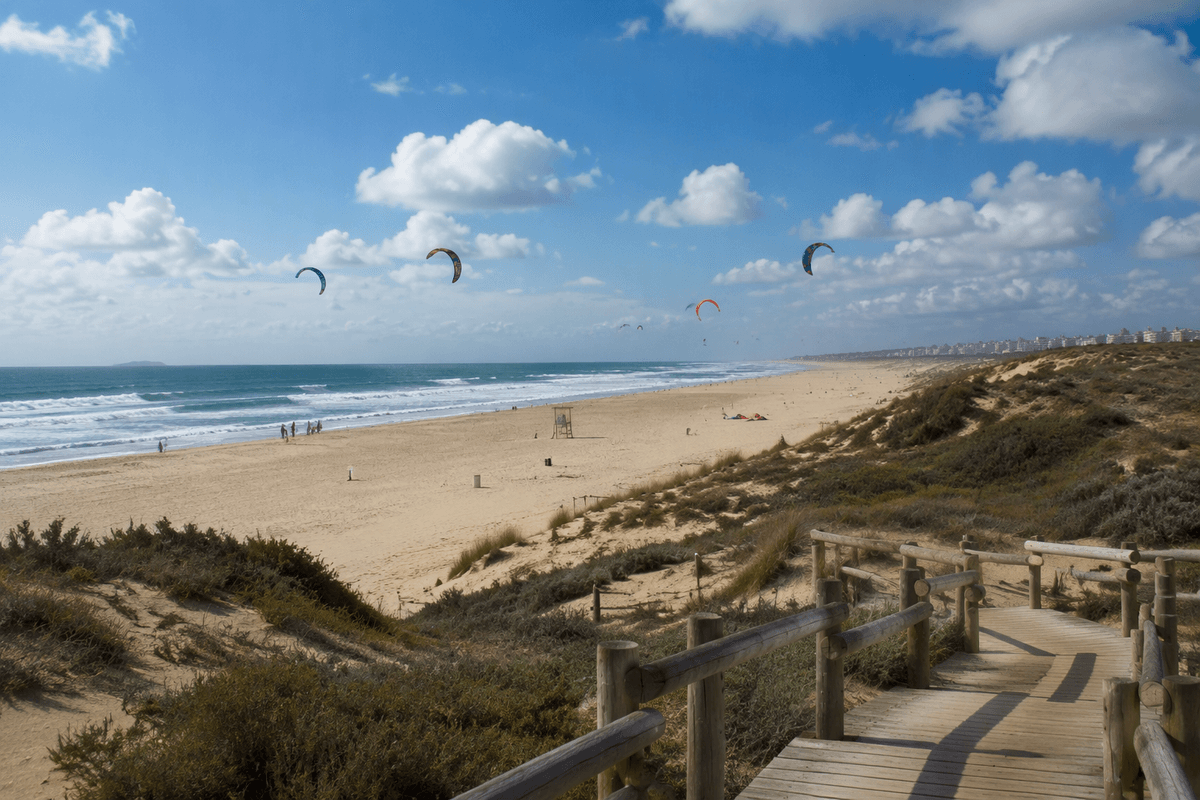
The first time I aimed for Costa da Caparica, the friction wasn’t the distance—it was the chain. From central Lisbon, you’re typically stacking metro plus bus (often via the Almada side), and any small miss turns into a 20-minute wait that eats the “quick ocean fix” fantasy. When it works, though, it’s the fastest way to swap riverfront calm for true Atlantic scale: wide sand, louder surf, and wind that makes you zip your jacket even on a bright day.
Caparica is best when you treat it like a half-day with a clear cutoff. Go earlier for cleaner light and fewer bodies, but expect more wind; late afternoon can be prettier but you’ll feel the return-time pressure if you’re trying to make a central dinner reservation. Once you’re there, keep the walking simple: a long beach stroll north or south is low-effort and satisfying, while the cliff-edge feel is closer to the Costa da Caparica–Fonte da Telha direction where the coastline starts looking wilder. The trade-off is exposure—there’s less shade, fewer “bail-out” transport options mid-walk, and on a gusty day the scenery is incredible but the comfort isn’t.
Top miradouros for sunrise, sunset, and night views
I usually felt the miradouro decision most sharply at the end of a long day: do you spend another burst of energy climbing for a view, or do you cash out early and save your legs for tomorrow? In Lisbon, the payoff is real, but the friction is too—steep lanes, slippery stone steps, and the occasional “it looked closer” mistake that turns a gentle plan into a sweaty detour.
For sunrise, I like Miradouro da Senhora do Monte because it’s high enough to give you that whole-city shape without needing to thread through crowds; the trade-off is that it’s exposed, so wind can make it feel colder than expected. For sunset, Miradouro de São Pedro de Alcântara works well when you want an easy win: it’s more accessible from the central neighborhoods and you can arrive closer to golden hour without a big hike—though it can get busy and a little noisy. At night, Miradouro de Santa Catarina is the most “drop in after dinner” option; it’s less about epic altitude and more about atmosphere, but you’ll want to keep your belongings tight when it’s packed and stick to well-lit routes on the walk back.
Timing, transport, and safety for breezy viewpoints
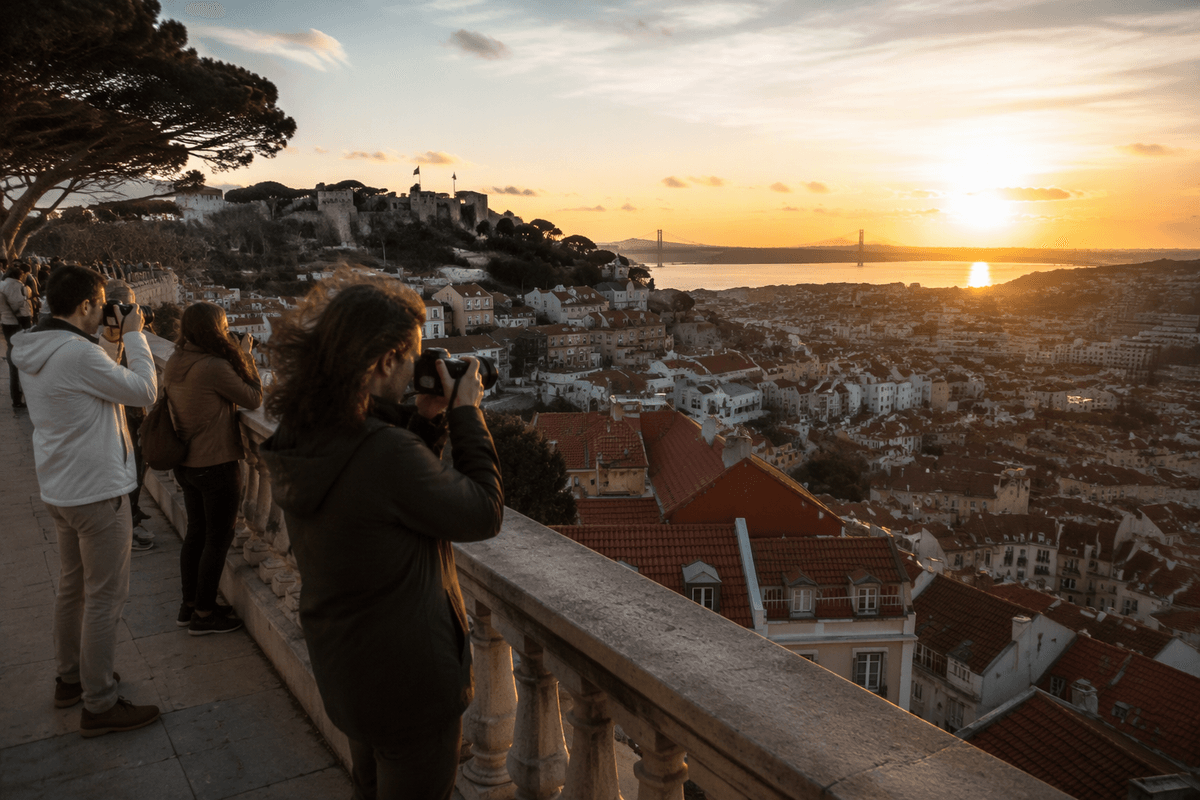
I learned quickly that “just popping up for a viewpoint” is only effortless if you time it like an appointment. The sweet spot is usually early (before the tour groups and before the heat bounces off the stone), or late enough that the light is doing the work for you—but that’s also when wind can make a miradouro feel colder and less linger-friendly than you expected. If you’re choosing between a higher, exposed lookout (like Senhora do Monte) and an easier terrace (like São Pedro de Alcântara), the trade-off is simple: altitude buys drama; access buys flexibility when your legs are already done.
Transport-wise, I try to avoid stacking too many “cute” routes in one evening. Trams are atmospheric but not efficient when you’re racing the last light; metro plus a short uphill walk is usually more predictable, and rideshares can be the best splurge for sunrise if you’d rather spend your energy at the top than on the climb. Safety is mostly about small habits: keep valuables zipped when viewpoints are crowded, avoid empty side streets as you peel away after dark, and don’t underestimate slick pavement—Lisbon’s pretty stones are not your friend when the breeze comes with damp air.
Putting it together: a balanced walks-and-views plan
The plan that finally felt balanced for 3–5 days was treating Lisbon like two alternating modes: “flat and flowing” one day, “up and earned” the next. A simple version is: Day 1 do the central riverfront as a reset walk (especially if you’ve just arrived), then take São Pedro de Alcântara at sunset when you can time it to the light instead of the climb. Day 2 put your legs to work early at Senhora do Monte (cooler, quieter), then keep the rest of the day museum-and-café level so you don’t blow your energy budget by lunch.
For your “almost-coast without the logistics spiral,” plug Belém–Algés into the middle of the trip as a low-effort afternoon: tram or train out, one-way promenade back until you’re ready to bail, then return before you start making panicked dinner math. If you truly want Atlantic scale, reserve Caparica for a half-day with a hard turnaround time—windy days are gorgeous but they shorten how long you’ll actually want to linger. The practical takeaway: pick one true-ocean outing, not two, and use miradouros as your flexible fill when transit starts costing you daylight.