When the winter bill breaks the monthly plan
By January, a heating bill can arrive after weeks of careful spending and undo the plan in one payment. The account may have looked manageable in autumn, then colder weather, longer evenings, or a rate increase pushes the balance beyond what remains after rent, food, and transport. Cutting back elsewhere often creates a second problem: savings stop, essential bills get delayed, or a credit card fills the gap. The difficult part is not simply that winter costs more. It is that the bill arrives unevenly, while income and most household commitments stay fixed. A workable budget has to absorb that timing without treating every high bill as a surprise.
Start with the bill your budget must survive
The first useful figure is not the average bill. It is the highest bill the household may have to pay while still covering essentials. Look back over the last 12 to 24 months and mark the largest electricity, gas, or heating payment, including any late fee or catch-up charge. If records are incomplete, use the most expensive recent month and allow room for colder weather rather than relying on a hopeful estimate.
That number becomes a stress test for the monthly plan. Could the payment be made without missing rent, reducing food spending, stopping a debt payment, or using credit? If not, the budget is already too dependent on mild weather or perfect timing. The answer may not be to set aside the full peak bill every month. It does show how much cash needs to be available before the expensive season arrives. A household with little savings may need a smaller payment plan, an early reserve, or both, because waiting for the bill to arrive leaves no time to correct the shortfall.
Separate seasonal swings from genuine price changes
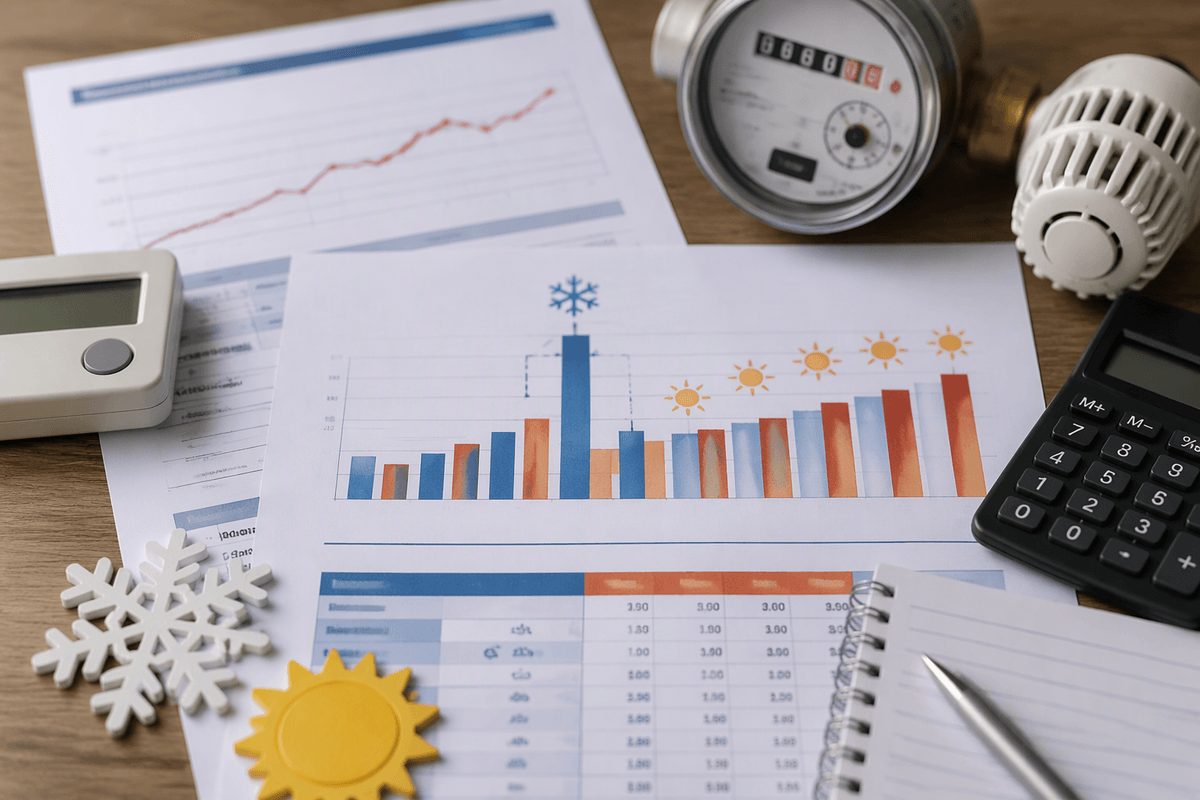
Before changing the monthly amount, compare what caused the largest bills. A cold month may have increased heating use even though the price per unit stayed the same. A rate change can do the opposite: usage remains similar, but each unit costs more. The bill may also include a fixed charge, estimated reading, delivery fee, or catch-up adjustment that makes one month look worse than the underlying pattern.
Put recent bills beside the weather and, where available, the usage measured in kilowatt-hours or therms. If usage rose sharply during a cold spell, the main issue is seasonal demand and the next mild months may provide some relief. If usage stayed close to normal while the total climbed, check the rate or fixed charges before assuming the household has become wasteful. This distinction matters when money is tight. Cutting heat may not solve a pricing increase, while raising the budget for a single unusually cold month can leave too much cash tied up later. The aim is to budget for the part that is likely to repeat, not to treat every high charge as the new normal.
Choose a monthly amount that survives lean months
Once the repeatable part of the cost is clearer, set a monthly amount that can continue through the cheaper months without weakening the rest of the budget. Add the expected annual utility cost, including a reasonable allowance for a colder season or higher rate, then divide it across twelve months. Compare that result with the amount the household can actually spare after essentials, debt payments, and planned savings. If the calculation leaves no room for ordinary setbacks, it is not yet a workable target.
A lower payment that can be made every month is usually safer than an ambitious amount that fails after one expensive repair, reduced paycheck, or unexpected bill. For example, a household might set aside $180 each month even if winter demand suggests $220, then direct tax refunds, overtime, or other irregular income into the difference before cold weather arrives. That approach only works if the extra money is treated as committed utility funding rather than available spending. Check the balance at the end of each month: a growing shortfall means the amount is too low, while a large surplus may show that cash is being held unnecessarily. The right figure is the one that survives lean months and still leaves the household able to handle ordinary life.
Use a reserve when the calendar cannot smooth costs

When the monthly amount cannot build enough balance before winter, a separate reserve can absorb the gap. Keep it distinct from emergency savings and everyday spending, even if the first target is modest. The reserve is for a known timing problem: money saved during lower-use months is held until heating or electricity costs rise. A household might direct $25 or $50 a month into it, then add a refund, bonus, or other irregular income when available. The amount matters less than protecting it from being used for unrelated purchases.
Set a clear floor before the expensive season begins. If the likely winter shortfall is $600 and only $300 is available, the plan still needs another response, such as reducing usage, requesting a payment arrangement, or lowering other flexible costs early. Do not wait until the account is overdue, when choices are narrower and fees may appear. A reserve is not proof that the monthly budget failed; it recognizes that twelve equal payments cannot always match twelve unequal bills. Once the reserve covers the expected gap, stop treating every mild-month surplus as spare cash.
Adjust usage only after checking what actually changed
Once the reserve is in place, usage changes should target the cause rather than react to the bill. Check the meter reading, billing period, weather, and current rate first. An estimated reading can create a temporary spike, while a longer billing cycle can make normal use look excessive. If the rate increased, lowering usage may help only partly; if usage rose because a heating system ran longer, the response may be more useful.
Start with changes that protect comfort and cost little, such as lowering the thermostat slightly, closing drafts, using a timer, or heating occupied rooms first. Avoid buying equipment before the savings are clear. A $300 replacement heater cannot solve a short-term cash problem if it takes years to recover its cost. Track the next bill or meter reading after each change. If usage falls but the charge does not, the rate or fixed fees deserve attention. That check prevents the household from cutting essential heat while the real pressure remains outside its control.
Review the plan before the next expensive season
Compare the amount set aside with the actual charges, then note whether the difference came from weather, usage, rates, billing errors, or a reserve that was too small. A plan that worked during a mild winter may not be safe to repeat if prices rose or the household’s income changed. Check the balance before reducing the monthly payment, even if recent bills look lower.
Make one adjustment at a time: raise the monthly amount, rebuild the reserve, arrange a different payment schedule, or target a specific usage problem. Set the change before autumn expenses begin, when there is still time to build cash without cutting essentials. The next winter bill should remain a known pressure to prepare for, not a surprise that forces savings or overdue payments to carry the gap.