You priced the boat, then reality creeps in
The price tag is tidy: a number on a listing, a dealer worksheet, maybe a monthly payment that fits if nothing else changes. Then the little questions start piling up in the same afternoon. Is the trailer included or “available”? Does it come with a working chartplotter, or the older unit the owner is “pretty sure still turns on”? Even before the survey, there’s a quiet mismatch between what’s being sold (a boat) and what you’re actually buying (a floating system with deadlines).
The first moment of friction is timing. The seller wants a quick deposit, the lender wants paperwork, and the marina wants to know length and beam before they’ll even talk about space. A low purchase price can hide a fast follow-on spend: safety gear, a battery you didn’t plan for, a slip deposit due this week, and a haul-out scheduled because the yard is booked out for months. The boat price stays the same; the cash demands don’t.
Your first quote shock: insurance isn’t one number
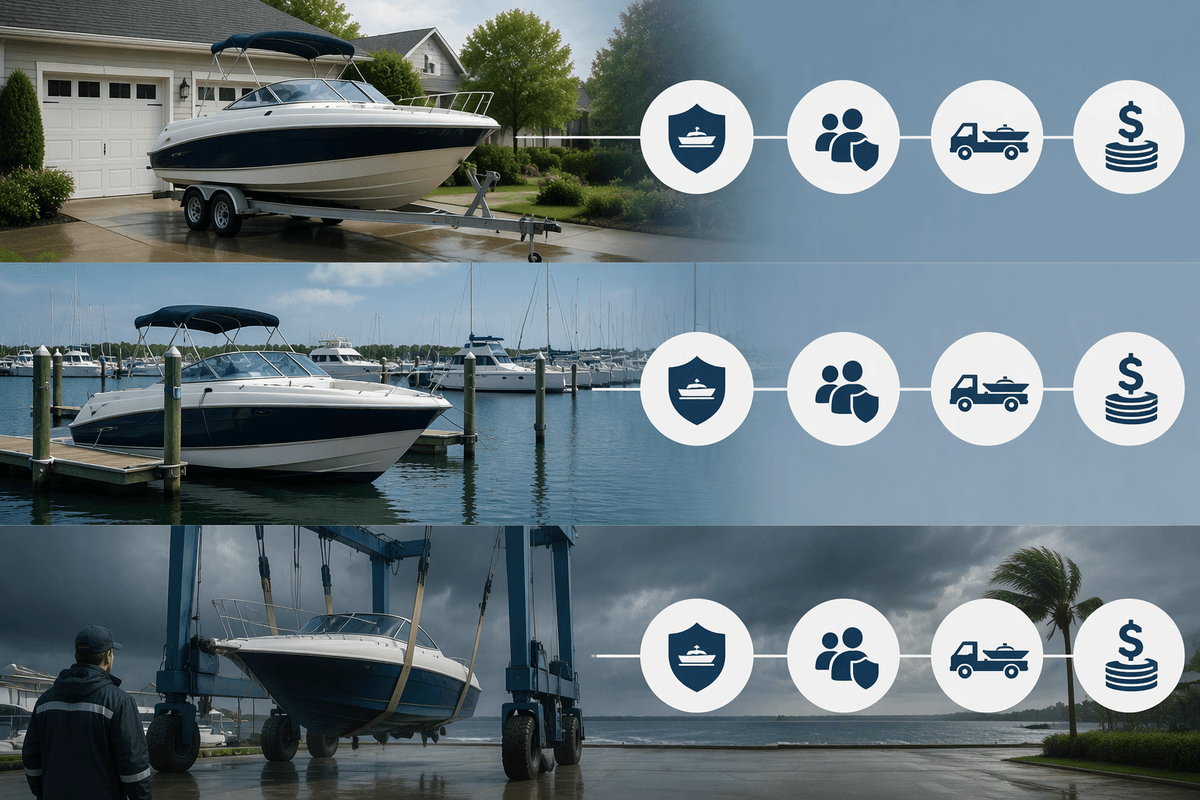
The insurance call feels like it should be administrative, but it quickly turns into a second round of pricing. One carrier asks for a survey before they’ll bind coverage. Another is fine with photos, but only if the boat stays on an inland lake and never runs at night. The deductible options look harmless until you realize the “cheap” premium is paired with a deductible that would land in the same week as a haul-out bill.
The quote also moves around based on details that don’t show up in the listing. Hull value versus agreed value changes the math. Liability limits can jump if the marina requires higher coverage, and towing coverage might be either included, capped, or missing entirely. Even storage can rewrite it: kept at home on a trailer is one risk profile, wet slip all season is another, and named-storm haul-out requirements can add a timing problem on top of the cost.
After two or three quotes, you’re not hunting the lowest number anymore. You’re checking for the version of coverage you can actually live with when something goes wrong, and budgeting a range instead of a single premium line item.
Where will it live? Storage choices reshape everything
Once insurance stops being a single line item, the next question becomes uncomfortably concrete: where does the boat physically sit on a random Tuesday in February? The slip that sounded “about right” over the phone suddenly comes with a deposit, a contract term that doesn’t match your season, and a rulebook that reads like a financing document. If you’re shopping in spring, the best spots may already be gone, which quietly turns storage into a timing constraint, not just a price.
Each option pushes costs into different buckets. A wet slip buys convenience, but it tends to stack monthly rent with utilities, parking, live-aboard restrictions, pump-out needs, and higher cleaning frequency because growth doesn’t wait for your calendar. Dry stack or rack storage can look cheaper until you price the per-splash fees and realize a “quick evening cruise” now requires the facility’s hours and staffing. Keeping it at home on a trailer can be the lowest cash outlay, but only if you already have secure space, towing capacity, and the patience for setup time that steals trips.
The practical move is to price storage the way you priced insurance: as a range with conditions. Ask what’s due upfront, what’s non-refundable, what happens if you sell mid-season, and which requirements (shore power cords, fenders, bottom paint, storm plans) become mandatory expenses. By the time you’ve done that, the “right” boat often shrinks or grows to fit the storage you can reliably afford, not the other way around.
Maintenance: choose a plan before it chooses you
The first season is when maintenance stops being an abstract “annual cost” and turns into a calendar you can’t ignore. A new-to-you boat might run fine on the sea trial and still have soft deadlines hiding in the logbook: oil hours, impellers, belt age, battery health, corrosion that’s been “watched,” and a bottom that was painted just long enough ago to be inconvenient now. The friction is usually scheduling. Good shops book weeks out, yards charge minimum labor blocks, and parts delays can turn a planned weekend into a lost month.
This is the point where a plan is cheaper than optimism. Either you commit to doing routine service on a predictable rhythm (and set aside cash for it monthly), or you drift until something forces a larger, time-sensitive spend. Paying for a spring commissioning and fall winterizing package can feel like overkill, but it also converts uncertainty into a known bill and reduces the “mystery weekend” problem. The constraint is that maintenance isn’t only dollars; it’s time, access to qualified labor, and the cost of missing the season you bought the boat for.
Repairs and surprises: build a stress-tested buffer
After you’ve priced storage and put routine service on a calendar, the next costs arrive in a different way: not scheduled, not polite, and usually paired with a decision you have to make quickly. A bilge pump that works “most of the time” becomes a same-week replacement when it fails at the dock. A throttle cable binds, a trim tab leaks, a trailer hub runs hot, or the alternator quits two days before a trip you already promised friends. None of these are exotic problems. The constraint is timing: waiting can create secondary damage, but rushing means paying whatever rate and parts availability the season dictates.
The buffer that actually holds up isn’t a vague “boat fund.” It’s a separate number that assumes two things go wrong in the same window: a mechanical repair plus a water-related or electrical issue that demands troubleshooting hours. Many owners underestimate labor because the part looks cheap; the invoice is often diagnosis, access, and shop minimums. A practical approach is to set a baseline reserve you don’t touch for upgrades, then add to it monthly like an insurance premium you pay yourself. If dipping into it would force a credit card balance, that’s useful feedback about what size boat is really tolerable.
Depreciation and exit costs: the bill you pay later

By the time you’ve built a repair buffer, the next quiet cost is the one that doesn’t send an invoice: value sliding while you’re still paying to keep the boat. Depreciation isn’t uniform. Some models hold up, others get punished by hour count, cosmetic neglect, and “one more season” of deferred maintenance that shows up in photos. The constraint is timing: selling in the wrong month can force a price cut larger than a year of routine service.
Exiting also has real transaction friction. Broker commission or marketplace fees, detailing, a pre-sale survey request, and last-minute fixes to pass a sea trial can land in the same window. If there’s a loan, payoff timing matters, and you may need cash to clear the lien before the buyer can close. Treat sales tax, upgrades, and electronics as mostly unrecoverable, then you’re estimating the resale range instead of hoping for a refund.
Decide what level of boat is tolerable
At this point the question shifts from “can we buy it?” to “can we carry it without flinching?” Put your numbers into three lanes: fixed (insurance, storage), predictable (routine service), and volatile (repairs, exit friction). Then stress it: assume an ugly month where the repair reserve gets hit and the slip bill still clears. If that scenario forces you onto a card balance or skipping essentials, the boat is too much boat.
The tolerable level is the one that still works when usage drops. If you miss a few weekends, the monthly burn shouldn’t turn into resentment. That tends to favor smaller length, simpler systems, and storage that doesn’t lock you into a long contract. The “right” boat often ends up being the one you can keep, not the one you can stretch into.