Start: choosing harbor vs skyline walk goals
The first real decision in Auckland usually hits five minutes after you step outside: do you chase the harbor edge while the light is good, or aim for a skyline-and-parks loop before the hills and weather catch up? Harbor walks pay off fast—boats, bridges, and that open-water feel—but they’re also where wind and sideways drizzle make you question your plan.
If you’ve only got a half-day, pick one “anchor” goal. Choose harbor views if you want a mostly flatter route with easy peel-offs toward Britomart and ferries, but expect cruise-day crowds and exposed sections. Choose skyline/CBD sights if you’d rather trade a few steady climbs for shelter, cafes, and faster access to museums and gardens when the forecast looks changeable.
Best harbor-view routes: Viaduct, Wynyard, Westhaven
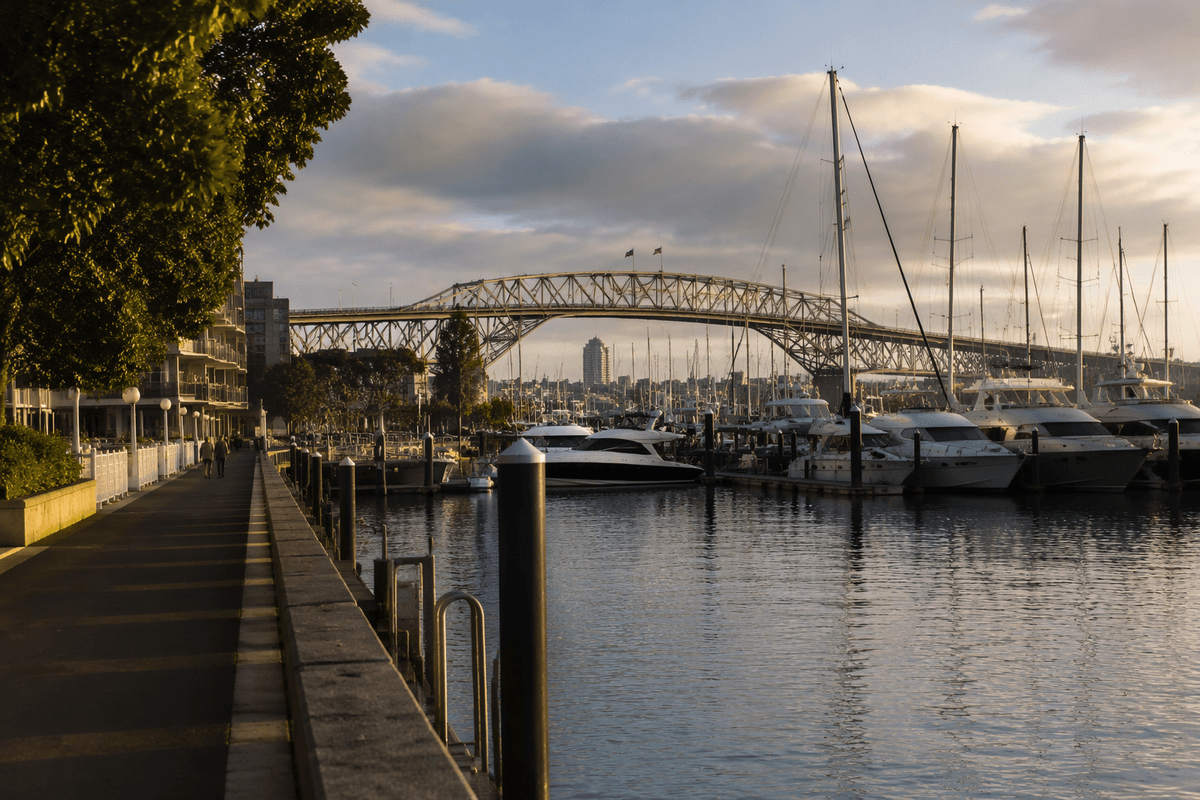
I usually start the harbor day at Britomart and walk west, because it lets you “earn” the big water views without committing to a long, exposed out-and-back. The Viaduct Harbour stretch is the easiest win: it’s flat, packed with food options, and the marina scenery reads as Auckland immediately. The trade-off is that it can feel busy and a little slow-moving at peak times—especially if a cruise ship is in—so your pace depends on how willing you are to weave around groups and restaurant queues.
From the Viaduct, Wynyard Quarter is the cleaner, more open waterfront continuation: wider paths, fewer pinch points, and better angles back toward the city if the sky clears. It works well when you want photos and space, but it’s also where wind becomes a real factor; in light rain, the lack of shelter turns “quick loop” into “cold mission” fast. If you want a longer, calmer finish, keep going toward Westhaven for a more local-feeling marina edge—less spectacle, more boats-and-bridge geometry—but note it’s not as attraction-dense, so it’s best paired with a ferry plan or a timed turnaround rather than wandering until you’re tired.
City-attraction loops: Queen Street, Albert Park, Domain
The moment the wind starts pushing spray off the harbor, the CBD loop becomes the sensible pivot—less dramatic water, more “I’m still seeing Auckland” per kilometer. Queen Street is the obvious spine, but it’s not the prettiest walk on its own: lots of traffic noise, frequent crossings, and a stop-start rhythm that can feel longer than the map suggests. What works is using it as a connector—Britomart up Queen Street to hit a café, then ducking into green space before the street starts to drag.
Albert Park is the quick reset button: shaded paths, benches, and a slightly elevated breather without committing to a full hill climb. It’s also where light rain is manageable—tree cover helps—while the downside is that it’s easy to do a tight loop and feel like you’ve “missed” the bigger Auckland scale. For that, keep pushing to the Auckland Domain. It takes more time and the slopes add up, but the payoff is a more destination-like walk, with the museum area and wider lawns that still feel worthwhile even under a gray sky. If you’re watching the clock, this is the loop to do as an out-and-back with a firm turnaround, not an open-ended wander.
Iconic viewpoint add-ons: Mt Eden, One Tree Hill
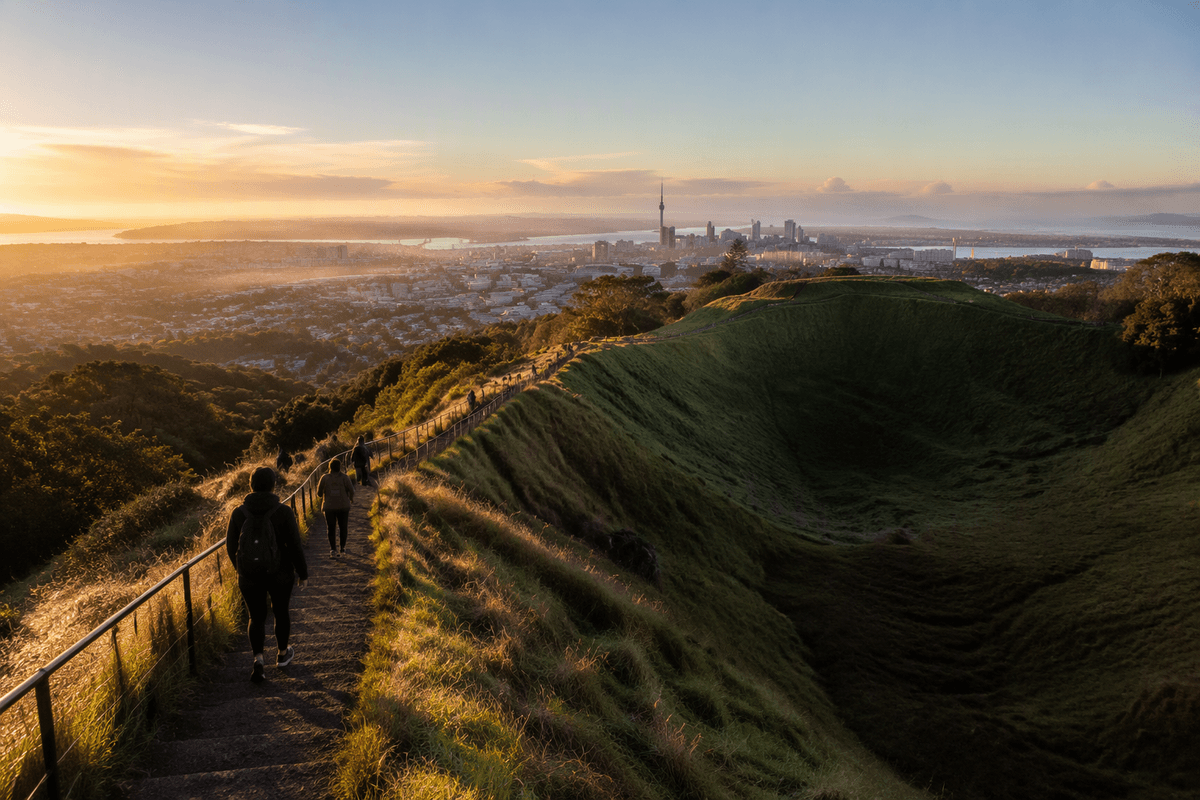
After exploring the waterfront or central business district, adding a volcanic viewpoint may seem like an easy way to fit more into the day. However, both Mt Eden and One Tree Hill involve a proper uphill walk, which can become less enjoyable in strong winds or poor weather. Mt Eden is easier to fit into a short itinerary. Its approach from central Auckland is relatively straightforward, the climb is manageable, and the summit offers wide views across the city and harbor. The shorter visit also makes it easier to return to public transport if the weather starts to deteriorate. Exposure is worth considering, though. Strong winds can make the summit surprisingly cold, even when conditions feel mild in the city below, so check the forecast before setting out.
One Tree Hill, located within Cornwall Park, offers a more spacious and greener setting. The surrounding parkland makes the visit feel like a proper outdoor excursion, with longer walking routes, open lawns, and fewer interruptions from busy city streets. It suits travelers who want to spend several hours outdoors rather than squeeze another viewpoint between central attractions. Reaching the park and returning to the city also takes more time, which may leave less room for waterfront activities or other planned stops.
For a one- or two-day visit, Mt Eden is generally easier to fit into the schedule while still providing memorable views. One Tree Hill is better suited to a day with fewer commitments, particularly when exploring parks and outdoor spaces is already part
Timing, distance, and difficulty at a glance
The biggest time trap in Auckland is assuming waterfront “looks close” on the map. Britomart to the Viaduct and around Wynyard is a comfortable, mostly flat 60–90 minutes if you keep moving; it turns into two hours fast if you’re stopping for photos, waiting on crossings, or inching past cruise-day bottlenecks. Westhaven adds a calmer extension, but it’s less sheltered and less “sticky” with attractions, so you’ll feel the distance more if the wind picks up.
The CBD-to-greenspace option is steeper but surprisingly efficient: Britomart up Queen Street, through Albert Park, and back down can fit in 60–90 minutes even with a café stop, though the stop-start crossings make it feel longer than the kilometers suggest. Pushing out to the Domain and museum zone is closer to 2–3 hours return once you account for the gradual climb and the temptation to linger—great value in light rain, but not the loop to start when you’re already tired.
For viewpoint add-ons, treat Mt Eden as a 2-hour commitment door-to-door with a real hill in the middle; One Tree Hill is more like a half-day once transit and park wandering get involved. If the forecast is shaky, keep your “hard” climb early, and leave the flatter waterfront as the flexible backup.
Transit, parking, and where to start/finish
The easiest “no-regrets” start point is Britomart: trains, buses, and ferries converge there, and it lets you decide in real time whether you’re committing to the waterfront (Viaduct/Wynyard) or pivoting uphill into the CBD. It also solves the common friction of weather roulette—if the harbor is getting hammered by wind, you’re already one street away from Queen Street connectors and indoor coffee.
If you’re driving, I’d treat the waterfront as a finish, not a starting line: Viaduct and Wynyard parking can be expensive and surprisingly time-wasting when it’s busy. A cleaner pattern is to park once on the city fringe, walk your loop, then use buses or a ferry hop to avoid a backtrack. Devonport works best as a deliberate one-way add-on: ferry over, waterfront stroll, then return when the light (or rain) tells you to.
Wrap-up: mixing routes for a balanced Auckland day
My best Auckland “mix” day usually starts with a weather check at Britomart and a willingness to switch gears without forcing a perfect loop. If it’s calm, take the fast harbor win first—Viaduct into Wynyard—then decide if you’re still enjoying exposure or just getting cold. The waterfront delivers the postcard views early, but it’s also where cruise crowds and wind can quietly drain your time and patience.
When the sky looks shaky, I flip it: do the CBD-to-green space loop (Queen Street connector, Albert Park, and either a firm turnaround or a longer push to the Domain), then treat the Viaduct as an “if we have it” sunset add-on. Mt Eden only makes the cut if you can commit to the climb before you’re tired; otherwise it becomes the part you resent. Practical takeaway: pick one anchor loop, then add one short, high-payoff extension—don’t stack two long ones and hope Auckland stays dry.