The cheaper room that costs more overall
A room listed at $900 can look like the obvious choice beside one priced at $1,150. That difference becomes less convincing after the first week, when the cheaper address adds longer train fares, occasional rideshares, a larger deposit, and basic furniture that the higher-priced room already includes. A temporary move also leaves less time to recover from a poor choice, especially when work or study schedules make daily travel unavoidable.
The lower rent is therefore only one part of the decision. A room that saves $250 each month may cost more once commuting, utilities, setup purchases, and short-notice changes are counted. Comparing those items before paying a deposit reveals whether the bargain is real or simply shifting the expense elsewhere.
Start with the complete move-in cost
Before comparing monthly rent, price the move as it will actually happen. The first payment may include a security deposit, application fee, first month’s rent, utility setup, storage, and travel to collect keys. Some landlords also require renters insurance or separate charges for parking, cleaning, or furnishing. These costs do not always appear in the headline price, yet they can absorb several hundred dollars before the new arrangement is usable.
A simple worksheet can separate refundable money from spending that is gone immediately. A $1,000 deposit may be recoverable later, but it still affects the cash needed today and may remain unavailable for the full stay. Setup purchases create another trap: bedding, cookware, a desk, or internet equipment can be reasonable for six months but wasteful for six weeks. Timing matters as well. Paying overlapping rent at the old and new locations, even for only ten days, can erase much of the apparent saving. The useful comparison is not “What is the rent?” but “What must be paid before normal daily life begins?”
When distance changes the monthly calculation

Once the initial payment is clear, distance becomes the next adjustment to the monthly figure. A room farther from work may save $200 in rent but require a $7 train fare each way. Over 20 workdays, that adds about $280 before counting occasional rideshares, parking, or extra travel for errands. A cheaper address can also make short-notice schedule changes more expensive, particularly when early shifts or late classes reduce access to public transport.
The calculation should use the travel pattern that is likely to continue, not the best-case week. Include commuting days, return trips, transfers, parking, and the cost of reaching groceries or essential services. A hybrid schedule may lower transport spending, but it can also create uneven costs when office days cluster together. Time has a financial effect as well. An extra 45 minutes each way may reduce the need for a car, yet leave less capacity for paid work, childcare, or study. The practical monthly figure is rent plus predictable travel, with a margin for disrupted days. At that point, the more expensive room may be buying back time and reducing exposure to last-minute transport costs.
Transport choices behave differently under pressure
That margin matters because transport rarely fails at its average price. A monthly pass may be efficient when the timetable matches the workday, but it offers little protection when a shift starts before the first service or ends after the last one. Driving creates a different pattern: fuel, parking, insurance, and maintenance may be manageable most weeks, then a repair or surge in parking rates changes the calculation immediately. Cycling can keep regular costs low, although weather, safety, and the need for suitable clothing may make it unreliable for important appointments.
Pressure also exposes the cost of convenience. A delayed train can turn into a $35 rideshare, while a missed connection may require unpaid waiting time or a late arrival at work. These exceptions should not be treated as guaranteed expenses, but ignoring them produces an overly optimistic budget. Compare each transport option under an ordinary week and a difficult week: include one early start, one late finish, a service disruption, and a necessary trip outside the commute. The stronger choice is often not the cheapest routine option, but the one that remains affordable when the schedule stops cooperating.
The risks hidden behind flexible arrangements
Flexible housing can reduce the commitment, but the saving often comes with less protection. A month-to-month room, short sublet, or furnished stay may avoid a long lease and large setup bill, yet the owner can raise the price, end the arrangement, or refuse an extension with limited notice. That creates a timing risk: finding another place during a busy season may mean paying higher rent, storage fees, a second deposit, or several nights in temporary accommodation.
Informal agreements create different problems. Without clear terms, it may be difficult to recover a deposit, challenge extra charges, or confirm what utilities and furnishings are included. A low weekly rate can also conceal cleaning fees, booking charges, minimum-stay rules, or a price that changes after the first month. The comparison should assign a cost to uncertainty rather than treating flexibility as free. Check the notice period, refund conditions, renewal likelihood, payment records, and backup housing cost. An arrangement that saves $150 now may be poor value if one unexpected move adds $600 in fees and lost time.
A fair comparison needs one shared timeframe
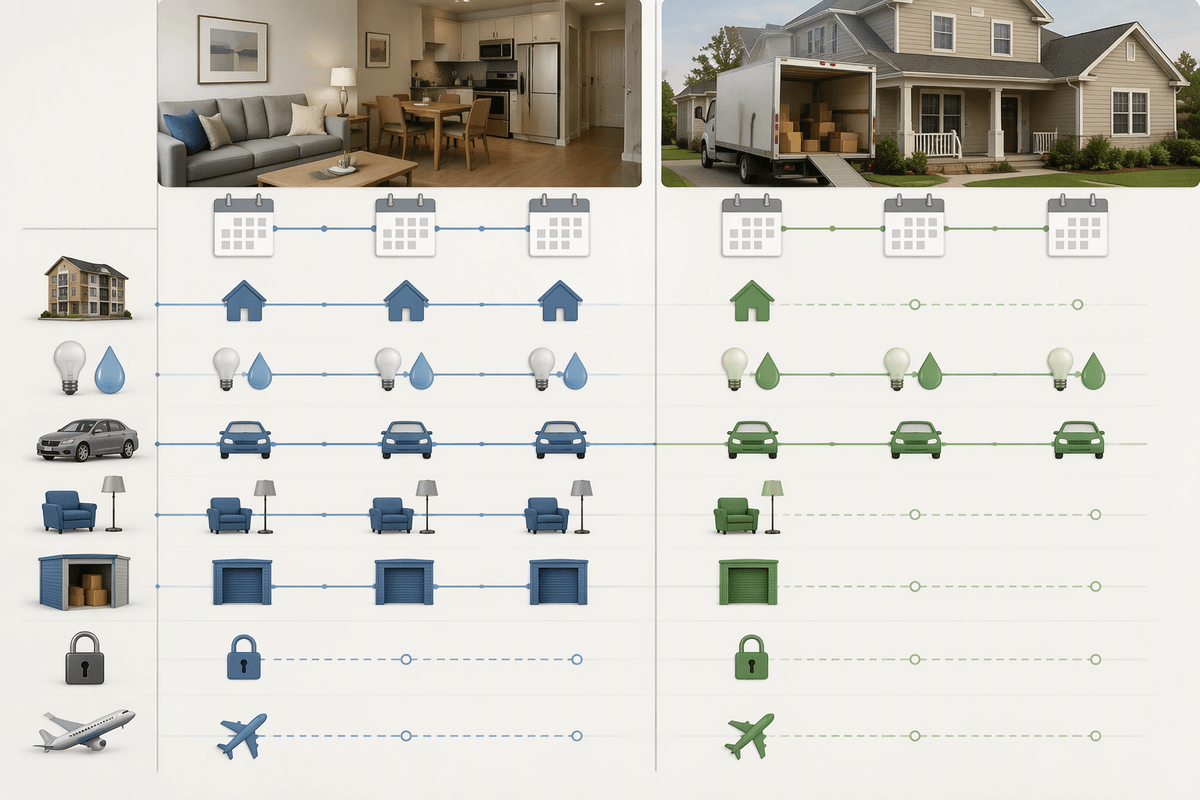
Once uncertainty has been priced, the remaining options need to be measured over the same period. Comparing one month of rent with six weeks of transport and setup costs can make either choice look better than it is. Use the expected stay as the base, then include every cost that occurs during that window: rent, utilities, commuting, furnishings, storage, deposits, and likely replacement travel. If the stay may last three months, calculate three months for every option rather than stopping at the cheapest introductory rate.
The timeframe should also reflect when money leaves and returns. A refundable deposit may not be a permanent expense, but it can remain tied up beyond the final day. A weekly rental might appear flexible until repeated renewal fees exceed a fixed lease. Run the comparison for the planned stay and one realistic extension, such as an extra month. That second view often reveals whether the arrangement is genuinely affordable or only attractive for a narrow, carefully chosen period.
Choose the option that remains workable
At this stage, the best option is not necessarily the one with the lowest total. It is the arrangement that still works if the stay runs longer, transport becomes less reliable, or an expected refund arrives late. Compare the full cost, the cash required upfront, the time spent travelling, and the consequence of one disruption. A small saving may not justify a fragile plan that depends on perfect timing.
Choose the option with enough room for ordinary surprises without forcing emergency borrowing, repeated moves, or expensive last-minute travel. That may mean accepting higher rent for included furniture, a shorter commute, or clearer terms. The final decision is therefore less about finding a bargain than identifying which arrangement remains affordable and practical when the temporary move does not unfold exactly as planned.