What “Disruption” Actually Feels Like
It may begin with a small change that is easy to dismiss: stools become less predictable, bloating appears later in the day, or foods that once felt ordinary suddenly seem heavier. “Disruption” does not necessarily mean one dramatic reaction. More often, it describes a gradual shift in how digestion feels and how regularly the bowel moves. The change may also come and go, making it difficult to connect with any single meal.
Several influences can overlap. A diet built around low-fiber convenience foods, limited plant variety, or abrupt restrictions may provide a different environment for gut microbes than the one they previously encountered. That does not make one food automatically harmful, and it does not prove that microbes are the only explanation. Stress, sleep, fluids, medications, and eating speed can matter too. The practical challenge is noticing the broader pattern without turning every uncomfortable day into evidence against a single ingredient.
Highly Processed Foods Change the Daily Pattern
A packaged meal can feel convenient without seeming unusual: it fills you up, fits the schedule, and may cause no immediate discomfort. The difference often appears in the daily pattern. Highly processed foods tend to replace foods that bring more fiber, water, and plant variety, while meals become easier to repeat with little effort. Over time, bowel movements may become less regular, stools may change in texture, or fullness may linger longer than expected. These changes are not proof that processed food alone is responsible, especially when portions, fluids, activity, and meal timing are also shifting.
The less visible change is reduced variety. Gut microbes respond to the materials reaching the intestine, so a narrow routine may offer fewer types of carbohydrates for them to use than a more varied diet. A person may notice this after weeks rather than after one meal, which makes the cause easy to misread. Adding or removing foods abruptly can also create temporary discomfort, making gradual patterns harder to evaluate. The useful question is often not “Which food caused this?” but “What has become more repetitive, and what has quietly disappeared?”
Low Fiber Leaves Helpful Microbes Underfed
A few days of low-fiber eating may not feel significant at first. Meals can still seem satisfying, yet bowel movements may become slower, smaller, or less consistent. Fiber reaches the large intestine partly undigested, where certain gut microbes use it as fuel. When vegetables, fruits, legumes, whole grains, nuts, and seeds are regularly replaced by refined or highly processed choices, those microbes may receive less of what supports their activity. The result is not always immediate, and constipation or bloating can have several overlapping causes.
The “fiber” is not a single switch. One person may tolerate a gradual increase well, while another feels more gas or discomfort when changing intake quickly. Fluids, movement, meal timing, and the type of fiber also influence the experience. This makes a single food difficult to judge in isolation. A more useful observation is whether low variety and low fiber have become the daily norm, especially when digestive changes continue across several meals or weeks rather than appearing after one specific item.
Sweeteners Can Create Confusing Reactions

The familiar sweet taste can leave an unfamiliar digestive impression. Sugar-free drinks, protein bars, gum, and reduced-sugar desserts may contain sweeteners that are absorbed differently or reach the large intestine in greater amounts. For some people, that may mean gas, urgency, looser stools, or a sense of abdominal movement; for others, there may be no noticeable response. The timing can also be misleading, especially when the same products contain little fiber, added fats, or several ingredients at once.
This makes sweeteners easy to blame and difficult to evaluate. A reaction may depend on the type and amount used, how often the product appears, and whether the overall diet has recently changed. Someone eating several “low-sugar” foods across a day may not connect the pattern with a single serving. Even a genuine sensitivity does not necessarily explain every digestive change. If symptoms are inconsistent, the broader routine—including product frequency, portion size, fiber, and meal timing—usually provides more useful context than the label’s sweetener alone.
A Healthy Food Can Still Feel Difficult
A bowl of beans, a large salad, or a sudden switch to whole grains may seem like an obvious improvement, yet the first experience can feel uncomfortable. More fiber and certain fermentable carbohydrates give gut microbes more material to use, which may increase gas, pressure, or changes in stool texture before the digestive routine settles. That response does not automatically mean the food is harmful, nor does it show that the microbes are “out of balance.” The portion, preparation, eating speed, and how quickly the change was introduced can all affect the result.
This is where healthy eating advice can become difficult to apply. A person may remove a nutritious food after one uncomfortable meal, then miss its fiber and variety over time. Another may continue eating large portions despite repeated discomfort and conclude that adjustment is simply required. The pattern is usually more informative: whether symptoms ease with smaller amounts, appear across several foods, or continue regardless of changes. Food tolerance is individual and inconsistent, so a healthy choice may still need a slower introduction rather than an all-or-nothing judgment.
Alcohol, Emulsifiers, and Repeated Irritation
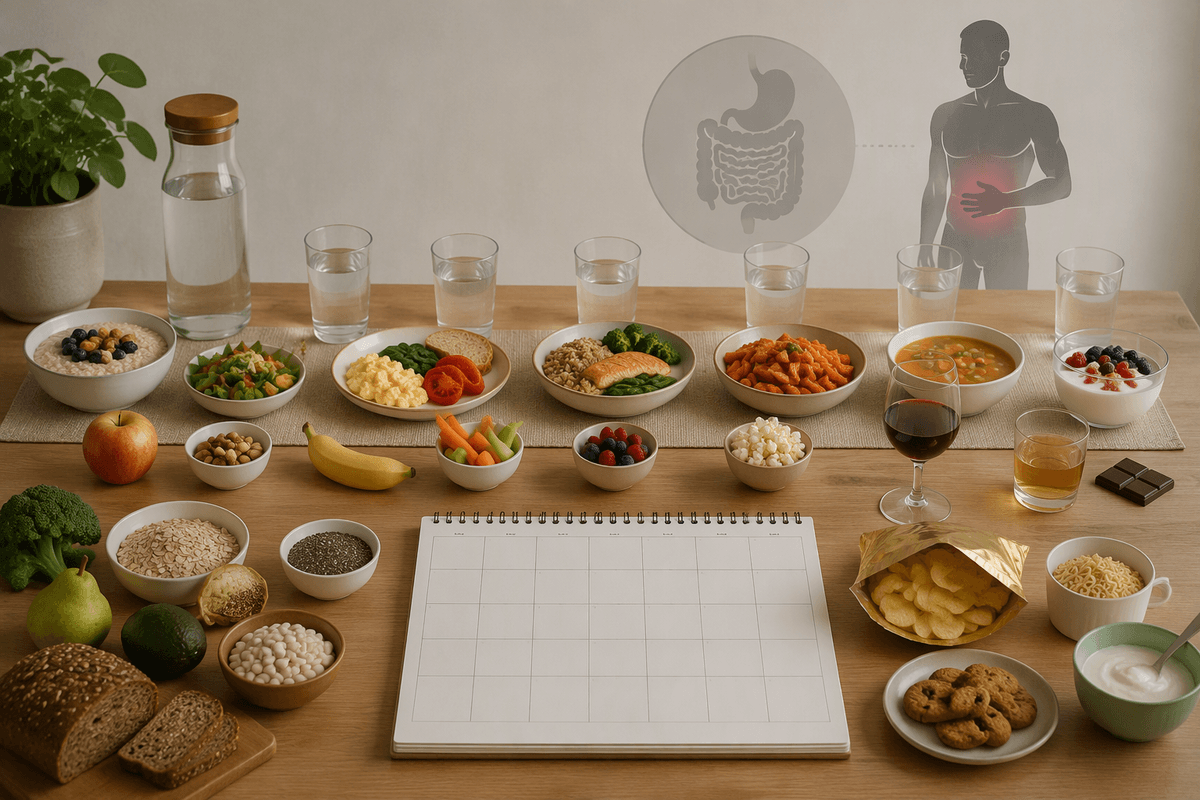
The digestive change may also follow what appears to be a separate routine: several drinks over the weekend, frequent packaged foods, or meals containing emulsifiers and other texture-preserving ingredients. Alcohol can affect hydration, meal timing, and bowel habits, while some additives may alter how certain foods are tolerated. These influences often arrive together. A late meal, richer portions, less sleep, and fewer fiber-rich foods may contribute as much as the drink or ingredient being blamed.
Repeated exposure may matter more than a single serving. If the same pattern continues, the gut may experience recurring irritation or altered conditions without producing one clear, immediate reaction. Someone might notice looser stools after drinking, bloating during a week of convenience meals, or increased sensitivity after several changes at once. That does not prove emulsifiers or alcohol caused the problem, and removing every packaged food may be unrealistic. Looking at frequency, amount, variety, hydration, and whether symptoms settle when the routine becomes steadier gives a clearer view than treating one label or beverage as the entire explanation.
Patterns Matter More Than Food Villains
After several uncomfortable meals, it is tempting to name one culprit and avoid it completely. That can feel reassuring, but it may hide the larger pattern. Digestive changes often reflect several shifts occurring together: less fiber, fewer plant foods, more packaged meals, irregular timing, larger portions, or a sudden restriction followed by a rebound. Gut microbes respond to this overall environment rather than to a simple list of “good” and “bad” foods. A single reaction can be real without explaining every change that follows.
A steadier view comes from noticing repetition. Are symptoms more likely during weeks with little variety, frequent sweetened products, alcohol, or rushed meals? Do they ease when portions, fluids, and meal timing become more consistent? These observations still have limits, because digestion naturally varies and improvements may not appear immediately. It is also possible for a nutritious food to be poorly tolerated in a particular amount or combination. Instead of building a long list of forbidden foods, it may be more useful to consider the routine as a whole and make changes gradually, leaving room for uncertainty rather than assigning one ingredient all the blame.