The month-end scramble that triggers an expense-card search
It usually starts the same way: the calendar flips, the close checklist gets tight, and “just one more” employee charge shows up without a receipt. Slack pings turn into a shared folder of screenshots, then a spreadsheet of who still owes what. The bank feed is current, but the story behind each transaction isn’t, and the first real constraint hits—time. There’s no room to chase vendors for reprints or debate whether a $42 meal was client-facing or internal.
That’s when the expense-card search begins, less out of curiosity and more out of fatigue. Reimbursements feel unfair and slow, corporate cards feel risky and under-documented, and month-end becomes a recurring audit drill. The expectation becomes simple: spend should move fast in the moment, while proof and policy alignment show up automatically later—even when people are busy or traveling.
Receipt capture: mobile-first speed versus audit-grade proof
The first week on an expense card program usually feels better fast: transactions appear in the feed, and people can snap a photo in the app before they even leave the counter. The catch is that “a photo exists” isn’t the same as “the evidence will survive an audit.” If the upload fails on weak Wi‑Fi, if the image is cropped, or if the receipt is missing the vendor name and total, the close team still ends up doing forensic work. Speed matters, but the timing constraint is real: once the employee is back at their desk days later, retrieval rates drop.
So the question becomes what the system does after the tap. Mobile-first tools optimize for capture prompts, SMS/email nudges, and one‑tap matching to the card transaction. Audit-grade tools obsess over completeness: immutable attachments, required fields (merchant, date, attendees, business purpose), itemization for meals, and an exception queue that forces cleanup before books are finalized. The trade-off shows up in adoption and enforcement. If capture feels heavy, people bypass it; if it’s too forgiving, controllers inherit the mess—just later, with higher compliance risk.
Approvals: lightweight routing or enforceable pre-spend gates
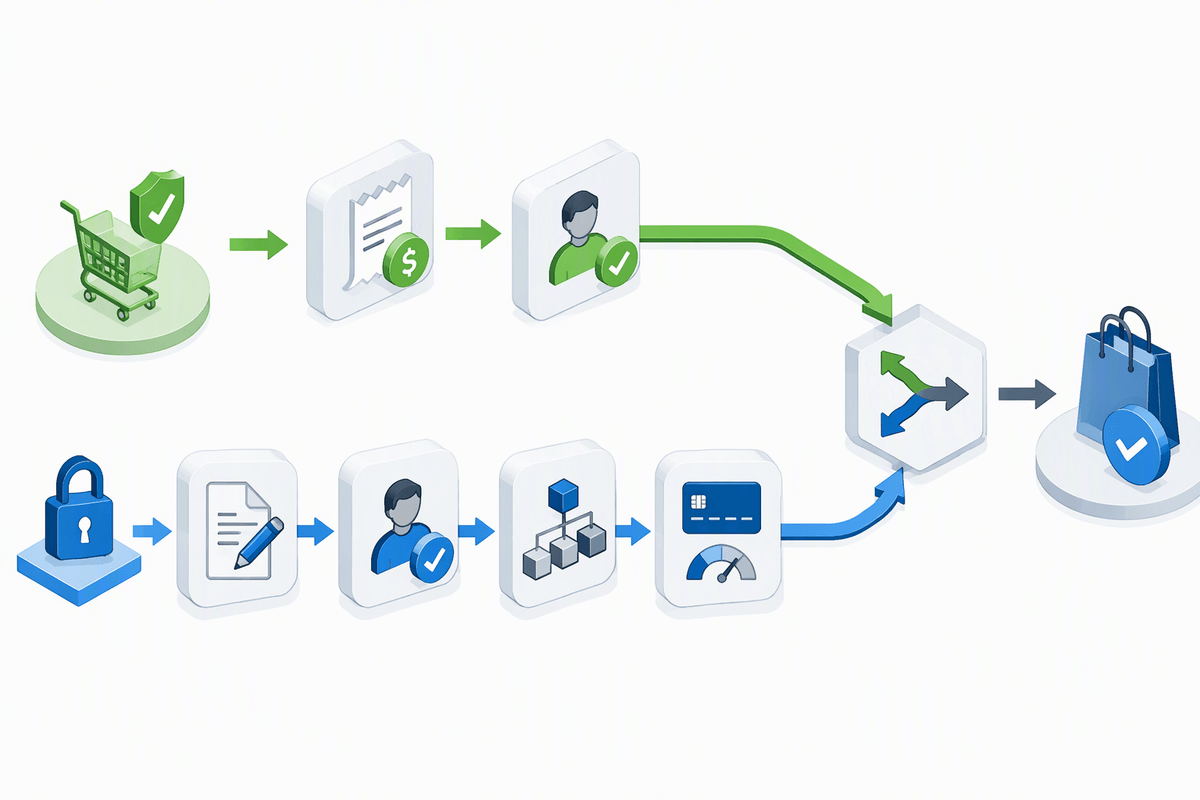
Once receipts are flowing, the next pressure point is the moment someone needs to buy something that isn’t routine—software, a client dinner over policy, a rush shipment. Teams often default to “approve after the fact” because it’s fast, but that choice quietly shifts the constraint to finance: the approval becomes a reconciliation exercise, not a control. Lightweight routing works when managers actually review weekly, but the real world is PTO, travel, and a Slack “looks fine” that never makes it into the record.
Pre-spend gates feel cleaner on paper: request, approver, budget category, then a card limit that opens for a window or a specific merchant. The friction is timing. If the request flow takes hours, employees either wait and miss the deadline—or they route around it with a personal card, reintroducing reimbursements. In practice, the best programs let you mix modes: instant routing for low-risk categories, and enforceable pre-authorization for spend that can’t be easily defended later.
Controls that actually work when people are busy
After approvals, controls are where good intent meets Friday-afternoon reality. If a platform only offers broad monthly limits, it won’t stop the $600 “quick” software purchase that lands in the wrong GL bucket, and finance is back to negotiating after the charge clears. The controls that hold up tend to be narrow and automatic: merchant and category blocks, per-transaction caps, time-bound limit increases tied to an approved request, and a clean way to code the spend at the moment it happens. The constraint is operational: overly strict rules create declines at the register, and every decline becomes an urgent ticket that ops has to solve in minutes.
Busy teams also need controls that fail safely. Instant card freeze/unfreeze, virtual cards for one-off vendors, and alerts that route exceptions into a queue (not a manager’s inbox) reduce the “we’ll fix it later” pattern. The tell in a demo is whether exceptions create a documented trail—who overrode what, when, and why—without forcing employees to learn a new process mid-trip. The goal shifts from perfect prevention to predictable containment.
Where teams get stuck after the demo looks perfect
The demo usually ends with a clean dashboard and a promise that “receipts match automatically,” but the first snag is messier: the policy you actually run rarely maps to the default categories. Somebody has to decide what happens when a charge is split across departments, when a meal needs attendees, or when a recurring vendor should always hit the same coding. If that work is postponed, the platform still “works,” yet close turns into an exception backlog with no owner and no clock.
Then adoption reality shows up. Managers don’t approve on schedule, employees ignore capture nudges once the novelty fades, and the exception queue becomes a quiet shadow system in email. The cost constraint isn’t just subscription fees—it’s the hours spent chasing edge cases, resetting rules after false declines, and explaining why a control was overridden without a durable note. Teams get stuck when “flexible” means inconsistent, and “controlled” means support tickets that feel like emergencies.
A practical shortlist using your risk and adoption reality

By this point, the shortlist usually isn’t about who has the nicest dashboard; it’s about which failure mode you can live with. If your risk is mostly “missing support” (light travel, low-dollar tools, lots of first-time cardholders), prioritize mobile capture that nags hard, requires a receipt before a transaction can be closed, and keeps attachments locked to the charge. You’ll give up some nuance in the approval layer, but close gets cleaner because the evidence shows up on time.
If your risk is “spend you can’t defend” (client meals, departments with budgets, managers who approve late), shortlist platforms that can do pre-spend requests that actually change the card state: time-boxed limit increases, merchant/category constraints, and overrides that force a reason. The adoption constraint is real, so look for tooling that lets low-risk categories stay fast while only the sensitive spend hits gates—otherwise the first wave of declines becomes the rollout headline.
If your team is small and already stretched, treat implementation and governance as features. Shortlist the vendor that makes exception queues assignable, enforces required fields without custom workarounds, and gives you a durable audit trail on coding changes and overrides. You’re not buying “automation” so much as buying fewer judgment calls at month-end, and the right fit is the one that reduces those decisions without turning every purchase into a ticket.
Decision-ready wrap-up: trade-offs you can defend
At the decision point, it helps to pick the trade-off you’ll be asked to defend in three months: “we optimized for adoption” or “we optimized for control.” If you choose adoption, make sure it’s not just a nicer app—set a hard rule that a transaction can’t be closed without complete support, and confirm the exception queue has an owner and a clock. If you choose control, don’t buy it in a way that creates daily declines; pre-spend gates should be narrow, time-boxed, and easy to approve on a phone.
The red flag isn’t missing features; it’s hidden operating cost. If the platform needs constant rule tuning, manager chasing, or manual recoding to stay compliant, you haven’t reduced risk—you’ve relocated it into close. The “right” program is the one whose predictable failure mode matches your team’s bandwidth: either nudging people into timely proof, or constraining spend into policy-shaped lanes without slowing routine work.