A slower 4-day Mexico City plan, not a checklist
On my first morning in Mexico City, I opened Maps and realized the “top sights” I’d saved weren’t a plan—they were a scatterplot. Centro, Chapultepec, Coyoacán, and Roma/Condesa aren’t hard to reach, but bouncing between them in one day is exactly how you end up spending your best hours in Ubers, arriving hungry to a museum line, and feeling weirdly behind schedule in a city that rewards lingering.
This 4-day structure is built around one neighborhood cluster per day: Centro Histórico (dense, walkable, earlier starts help), Chapultepec/Polanco (big park + one major museum max), Coyoacán/San Ángel (slower, farther south, commit to the day), and Roma/Condesa (your home base, best for a flexible “wander and eat” finish). It works well if you like slow mornings because you can front-load one “anchor” each day, then let food and streets fill the gaps; it doesn’t work if you insist on squeezing in Teotihuacan too—unless you’re willing to trade a very early start for a visibly more tiring day.
Think in two blocks: late morning to mid-afternoon for the main sight (when you’ll face the worst queues), then a second, optional block for markets/cafés nearby. If something runs long, you skip the optional without feeling like the day “failed,” which is the whole point.
Day 1: Centro Histórico basics; Must Zócalo; Opt Templo; Skip extra museums
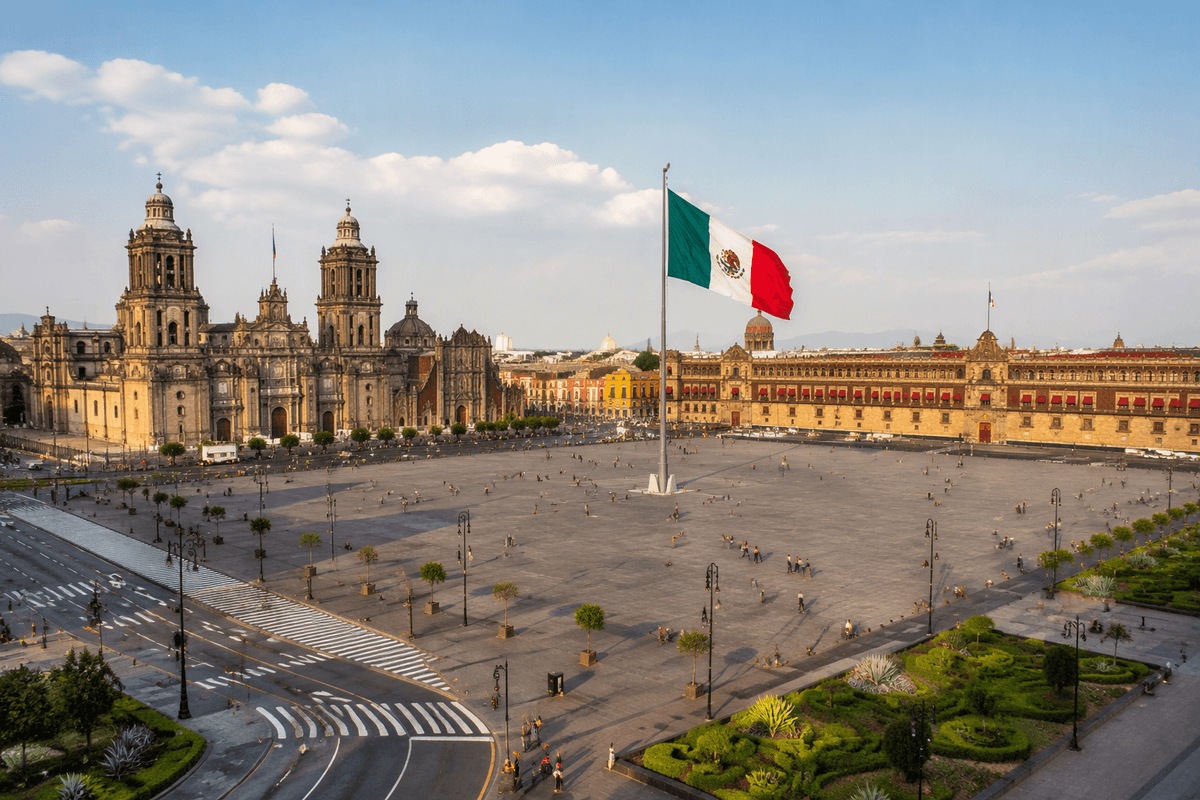
I felt the first real pacing decision on Day 1 before I’d even finished coffee in Roma: do you head to Centro early and “win” the streets, or do you accept a slower start and pay for it with crowds? For a first-time visit, I’d pick an early Metro/Uber in (aim to be around the Zócalo in the late morning), because Centro is one of the few places where being an hour earlier actually changes the experience—photos, noise, and even how long you’ll tolerate being on your feet.
Make the Zócalo your non-negotiable anchor and let everything orbit it. The plaza-to-Catedral-to-side-streets loop is satisfying even if you don’t enter every building, and it’s compact enough that you’re not bleeding time in transit. What doesn’t work as well is trying to stack “just one more” classic museum nearby; lines and security checks quietly turn a calm walk into a series of waits.
If you want one add-on that feels like depth (not homework), slot in the Templo Mayor as your optional. It’s right there, it’s visually distinct from the colonial layer around it, and it gives you a clear “we did Centro” moment without committing to a whole afternoon indoors. The limitation: it’s exposed and sun-heavy, so if you arrive midday or you’re already tired, it can feel more draining than inspiring—this is where skipping an extra museum and taking a longer lunch pays off.
Day 2: Chapultepec/Polanco; Must park; Opt Anthropology; Skip over-scheduling
The first snag on Day 2 is that Chapultepec looks “easy” on a map from Roma/Condesa, so it’s tempting to treat it like a quick morning add-on before Polanco. In practice, the park rewards time, and rushing it makes everything feel like a commute between gates. I’d go late-morning rather than crack-of-dawn: you’ll trade a little extra foot traffic for a day that actually matches a slow-morning rhythm, and you won’t feel like you’re speed-walking green space just to earn a museum later.
Make the park itself the must. Pick one clear spine—strolling the main paths, pausing where it feels good, and committing to a real sit-down break—because Chapultepec is where CDMX finally gives your feet a softer surface after Centro. What works well here is letting hunger set your schedule: once you’re thinking about lunch, that’s your cue to drift toward Polanco instead of squeezing in “one more” viewpoint. The constraint is distance; wandering without a loose direction can turn into a surprisingly long loop that eats the part of the day you wanted for food.
If you’re going to do one big museum this trip, the Museo Nacional de Antropología is the strongest contender—but only if you accept that it’s not a “pop in for 45 minutes” stop. It’s dense, and the moment you try to see every hall, your attention (and patience) evaporates. I’d choose a short list—Aztec/Mexica plus one or two additional rooms—and leave while you still feel curious, not depleted.
The thing to skip on this day is over-scheduling Polanco as if it’s an attraction in itself. Yes, you can stack shopping streets, multiple galleries, and a long sit-down meal, but the energy shifts fast from pleasant to performative when you’re chasing reservations and addresses. Better: pick one nice lunch, one slow walk, and then call it before traffic turns the ride back to Roma into your evening’s main event.
Day 3: Coyoacán/San Ángel; Must Frida area; Opt markets; Skip long detours
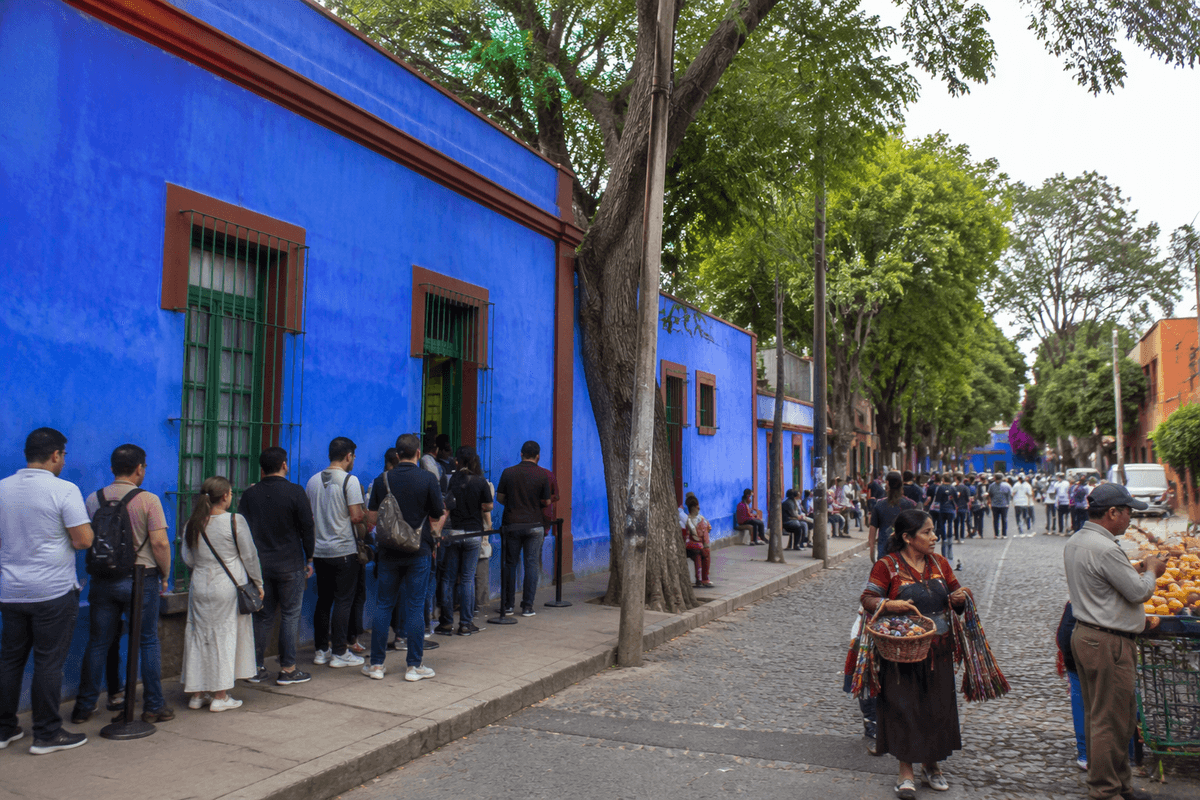
On Day 3, I always feel the temptation to “just add” Xochimilco or a quick stop at UNAM because you’re already in the south. It sounds efficient until you watch your afternoon disappear into traffic and transfers. From Roma/Condesa, Coyoacán is doable by Metro/Uber, but it’s far enough that you want to commit to staying put once you arrive—otherwise the day becomes a string of arrivals instead of a neighborhood you actually inhabit.
The must anchor here is the Frida area, but I’d treat it as a zone, not a single doorway. If you’re aiming for Casa Azul, you’re buying yourself a schedule: tickets and entry times can dictate your whole morning, and the line/queue energy is real. What worked better for me was building a Coyoacán loop that still feels complete even if the museum timing is awkward—coffee, a slow walk through the leafy streets, the plaza, and a long lunch you don’t have to “earn” by speed-running exhibits.
If you have extra bandwidth, slot in a market as the optional rather than another far-flung sight. Markets give you that CDMX food-and-people fix without demanding museum-level focus, and they’re forgiving if you’re a little tired. The thing to skip is any long detour that requires a second major transit leg; the south is where “it’s only 20 minutes” turns into an hour fast, and this is the day where staying local pays you back with a calmer evening.
Day 4: Roma/Condesa; Must café-walk; Opt galleries; Skip distant day trips
Day 4 is when staying in Roma/Condesa finally pays off—mostly because you’re not negotiating with traffic before you’ve had breakfast. I’d start with a café-walk that’s intentionally a little meandering: pick a morning spot you actually want to linger in, then let yourself drift through the small streets toward Parque México or Parque España. What works well is how “productive” this feels without trying; you’re still seeing a lot, but you’re doing it at walking speed, and you can course-correct on mood (too hot? duck into a shaded park; too crowded? cut onto quieter blocks). The constraint is that weekends can turn the sidewalks into a slow shuffle, so if you hate that, go earlier or keep it to a weekday morning.
Make the walk the must—not a specific address you’ll be angry about missing. The real win in these neighborhoods is the rhythm: coffee, a few blocks, a pause, something sweet, another few blocks. If you try to bolt on one “quick” errand across town in the middle of it, you’ll feel the day fracture into transit again, which is exactly what you’re trying to avoid by basing yourself here.
If you want an optional that matches the energy, slot in one or two small galleries in the early afternoon, when your feet are tired but your brain isn’t. This is where Roma/Condesa beats the big museums: you can commit for 30–60 minutes, step back outside, and still have daylight for a late lunch. I’d skip distant day trips today—even a “simple” half-day excursion comes with timing stress and a hard stop, and it’s surprisingly satisfying to end the trip with a neighborhood day that doesn’t need a scoreboard.
Choosing what to miss so the trip feels complete
On my last morning, I caught myself reopening the map of saved pins—Teotihuacan, another “essential” museum, a restaurant across town—and it felt less like curiosity and more like a panic reflex. With four days, the win isn’t proving you covered CDMX; it’s protecting enough unclaimed time that a long lunch, a surprise bakery stop, or a shaded bench in Chapultepec doesn’t feel like failure. The moment you start stacking neighborhoods in a single day, the city quietly collects the fee in traffic, lines, and that low-grade fatigue that makes everything blur.
The cleanest decision cue I found was this: if the next add-on requires a second major transit leg (or a timed ticket), it’s probably the thing to drop. Teotihuacan can be incredible, but it turns into an early-start, logistics-forward day that crowds out the slower rhythm Roma/Condesa makes possible—so either commit to it as its own day, or don’t half-do it while you’re already tired.
What made the trip feel complete was choosing one “big” cultural anchor (Centro’s core, Anthropology, or Casa Azul timing) and letting the rest be texture: parks, markets, neighborhood walks, meals you don’t rush. You’ll remember the pace more than the count, and CDMX is one of the few cities where that’s not a consolation prize.